
Forecourt branding brief in Boksburg
The client was a fuel-site operator in Boksburg needing a cleaner front elevation for a forecourt that had started to look tired after years of sun, dust and traffic grime. The brief was to replace dated lettering with a sharper set of outdoor letter elements that would suit the site from the road, at the pump island and from the main entrance. Because this was a working forecourt, the job had to be neat, quick and safe, with no disruption to trading hours or vehicle movement.
The design direction was straightforward: keep the wording legible at distance, use proportion that would sit well above the canopy line, and make sure the finish would hold up in Gauteng weather. Boksburg sites often deal with strong afternoon sun, windblown dust and the odd heavy rain spell, so the client wanted a solution that would not warp or fade early. The branding refresh also had to align with local sign bylaws and site safety rules, especially around fixing points and access near active lanes.
What we needed to work around
The biggest constraint was live-site access. We had limited windows for measuring, fabrication checks and final fitment because tankers, staff and customers were moving through the forecourt every day. We also had to work around existing mounting points and the structure behind the fascia, which meant the lettering size and return depth needed to be matched carefully. On a site like this there is no room for guesswork, because even a few millimetres off can throw out the whole line.
Another factor was durability. Outdoor letters on a forecourt face heat, vehicle exhaust, fine dust and periodic cleaning, so the material choice had to balance good appearance with long service life. In this case we recommended a setup that would keep the face clean, hold shape in direct sun and remain serviceable if a section ever needed future maintenance. Power access was also considered, since load shedding and site generator changeovers can affect the way illuminated signage is commissioned and tested.
- Working around trading hours and vehicle flow
- Matching existing fixing centres and structure depth
- Choosing materials suited to coastal humidity is not the issue here, but Gauteng heat and dust still matter
- Allowing for future maintenance without removing the full run of lettering
Fabrication and supply from our Midrand base
We supplied the letter set as outdoor-ready signage components made to order in our Midrand workshop, with all sizes checked against the final site measurements before production. The build included formed letter bodies, matching returns and clean face panels, plus the fixings needed for secure mounting. For this type of forecourt work, accuracy in the bending and cutting is what keeps the line looking straight once it is on the wall, so we treated the alignment and spacing as a critical part of the job.
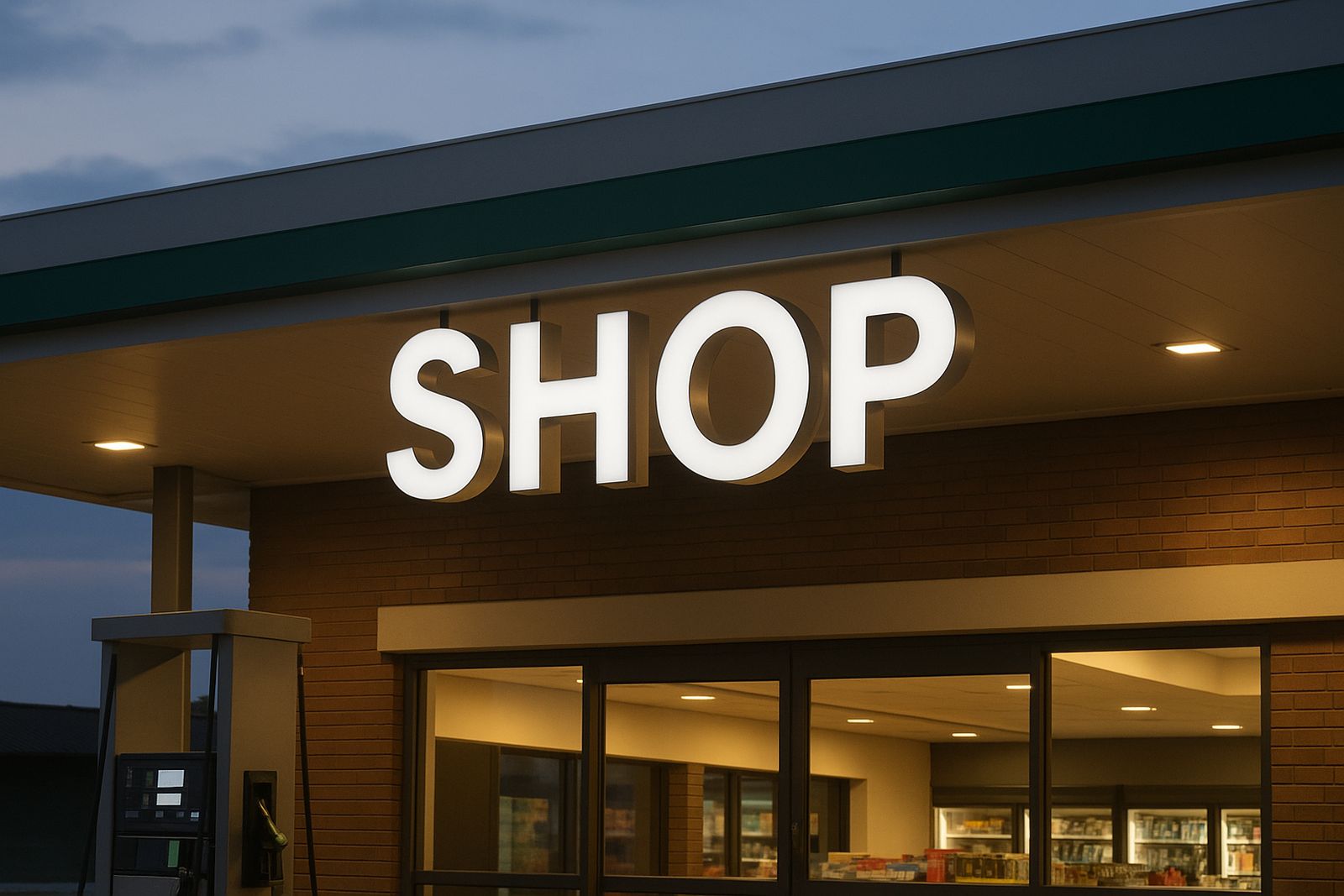
The overall lettering run measured 4.8 metres across, with individual letters ranging from 420 mm to 910 mm in height. Returns were formed to a 100 mm depth to give the letters presence from the road without making them overly bulky on the fascia. Face material was selected for outdoor colour stability, and the set was prepared for a clean edge finish that would stand up to regular washing. We also supplied spare fixings and small offcuts for site adjustments, which helps when an installer has to fine-tune around uneven wall sections.
Our team handled the supply side with coordination from Yaseen on operations, technical review by Kobus, and sales and client updates through Bonolo and Thandeka. That mix matters on a job like this because a sign may look simple once installed, but the checks behind it are what stop delays, remake risk and missed fitment slots.
- Made to order in Midrand with size checks before fabrication
- Letter heights from 420 mm to 910 mm
- 100 mm returns for clear visual depth
- Outdoor finishes selected for sun, dust and regular cleaning
Installation planning for a live forecourt
Desigan led the install planning with a site walk-through to confirm lifting access, ladder positions and the safest order of work. On forecourts, planning is half the job. You need to know where vehicles can queue, where staff can stand clear, and how long each fixing stage will take before the site has to open fully again. We mapped the sequence so the lettering could be offered up, levelled and fixed without holding up the forecourt longer than needed.
The sign-maker client wanted the option to use the letters again for future fascia changes, so we made sure the mounting plan allowed practical removal if needed. That meant clear fixing points, sensible spacing and a finish that could be cleaned without damaging the faces. We also did a final commissioning check after fitment to confirm line, spacing and visibility from the main approach road. The result was a frontage that reads properly at speed, which is exactly what a forecourt needs when motorists have only a few seconds to take it in.
Timeline, handover and result
The full job ran over three weeks from final site measure to handover. Week one covered briefing, measurements and layout sign-off. Week two was fabrication and pre-fit quality checks. Week three covered delivery, installation planning and final handover support. That schedule worked well because it gave enough time to catch small issues before the letters went out, instead of trying to solve them on site under pressure.
The finished forecourt letters gave the client a cleaner road-facing identity and a more professional look across the front elevation. The updated set improved day and night legibility and helped the site present as well managed and current. The client also benefited from a neater maintenance path, since the letter system was supplied in a way that allows future support without major rework.
- Three-week programme from measure to handover
- Better visibility from the approach road and pump area
- Cleaner front elevation with easier ongoing maintenance
- Reduced risk of site downtime during future service work
What we would carry into another forecourt lettering job
If we were doing the same kind of job again in Boksburg or elsewhere in Gauteng, we would keep the same sequence: measure carefully, confirm fixing details early, and allow enough time for a proper installation plan before fabrication starts. For forecourt work, that approach saves time and avoids unnecessary site disruption. We would also keep the material discussion practical from the start, because the right choice is usually the one that balances outdoor life, maintenance access and visual impact.
For sign makers handling fuel-site branding, our view is simple: get the measurements right, plan around trading hours, and make sure the letters are built for local conditions rather than just for the drawing. That means paying attention to spacing, return depth, mounting access and the realities of dust, heat and cleaning. Do those basics well and the finished sign will keep doing its job for years, not months.
Key facts
| Project type | Outdoor forecourt letter elements |
|---|---|
| Town | Boksburg |
| Programme | 3 weeks |
| Overall run length | 4.8 metres |
| Letter height range | 420 mm to 910 mm |
| Return depth | 100 mm |