
What the coil storage rack is for
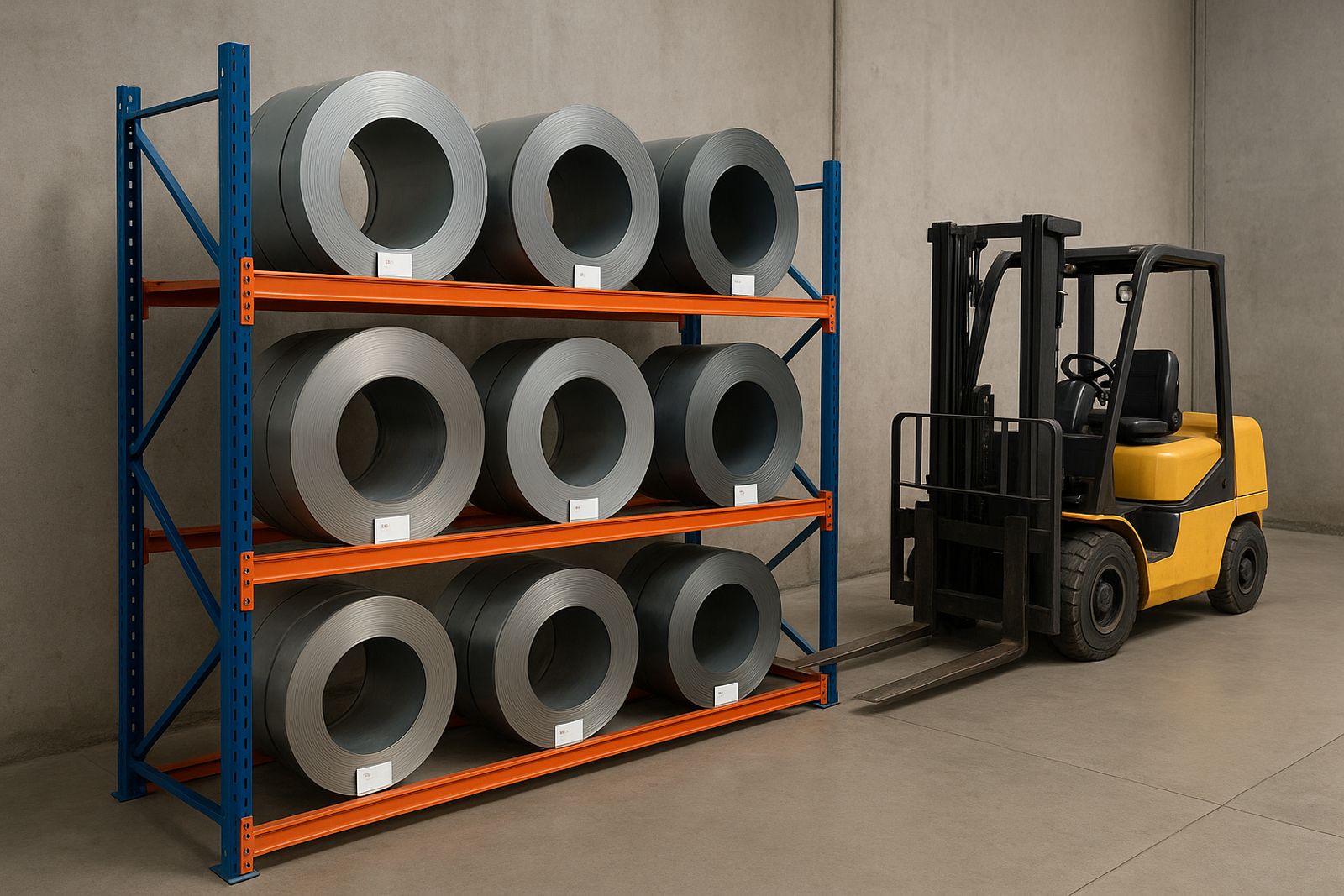
A coil storage rack is a purpose-built storage unit for holding sign-making coil and return material in a tidy, upright or horizontal format depending on the model. It keeps stock sorted by colour, thickness and width so operators can find the right material without lifting piles of loose coils or searching through wrapping.
In a workshop that handles channel letters, trims and folded return work every day, organised storage saves time and helps protect the material from dents, dust and moisture. That matters in Durban’s humidity, in open-sided workshops, and in high-traffic spaces where material gets bumped by trolleys and cut lengths if it is left on the floor.
The rack is a simple item, but it makes a real difference to workflow. It reduces handling damage, supports better stock control and keeps the production area cleaner, which is useful when you are trying to work safely around cutters, folders and live jobs.
Standard sizes and layout options
Channel Letter supplies coil storage racks in practical workshop sizes, with options suited to small sign shops, growing fabrication teams and higher-volume production floors. The exact layout depends on how much stock you keep on hand and whether you need single-side access or access from both sides.
Common choices include rack frames with multiple levels, adjustable bays and widths that suit standard coil lengths used for sign returns. Many workshops prefer a compact footprint for tight Midrand or Sandton premises, while larger operations in Pretoria, the East Rand or Durban may want a longer unit that can hold more stock without crowding the cutting area.
- Compact rack options for smaller work areas and lower stock volumes
- Multi-tier configurations for colour sorting and FIFO stock rotation
- Heavy-duty frames for regular daily coil handling
- Custom spacing for different coil widths and return material lengths
If you keep a wide mix of colours, ask for a layout that allows labels or colour tabs. That makes it easier for the whole team to pick the same material every time, especially where one shift hands over to another.
Where it suits best in a sign workshop
This rack suits sign makers, channel-letter fabricators and production teams that need quick access to return material without cluttering the floor. It works well near the bending area, material prep point or cutting station, provided there is enough space to move coils in and out safely.
It is also useful in mixed workshops where coil, sheet material and completed parts are stored together. Instead of stacking returns against walls or balancing them on pallets, the rack gives each colour or batch its own place. That helps when orders are moving fast and the team is working around load-shedding schedules or limited daylight in winter.
For installers and production crews working nationwide, a proper storage rack also supports better stock packing before delivery. Coils that are stored correctly are less likely to arrive bent or marked, which means fewer problems when material is unpacked on site in places like Pretoria, the West Rand or coastal Durban.
- Sign fabrication workshops
- Channel-letter production areas
- Material stores and receiving areas
- Training centres and demonstration spaces
- Sites that need cleaner floor space and better stock control
Installation, anchoring and power needs
The coil storage rack is a mechanical storage unit, so it does not need power, gas or air supply. That makes it easy to place in most workshops without adding electrical load, which is useful where backup power is already stretched by bending machines, extractors or compressors.
Installation is usually straightforward, but the floor should be level and capable of taking the weight of the rack plus the stored coils. In some premises the rack can stand free, while in others it is better to anchor it to the floor or wall for safety, especially where there is constant forklift movement or a lot of handling near the storage area.
When planning the fit-out, leave enough aisle width for staff to remove and replace stock without scraping coil edges. Also allow for door width, delivery access and turning space. If the unit is going into an upstairs or narrow-bay area, check the access route before delivery so there are no delays on site.
- No power connection required
- No gas or compressed-air connection required
- Needs a level floor and proper clearance around the unit
- Anchoring recommended where stock turnover is high
Care, cleaning and preventive servicing
Like any workshop storage equipment, a coil rack needs basic care to stay straight and safe. Keep the frame clean, check for loose fasteners and make sure no sharp burrs or damaged edges are catching the material wrap. Dust and metal offcuts should be swept away regularly so the base stays dry and the area is easy to move around in.
If the rack is in a coastal workshop, watch for surface corrosion and wipe the unit down more often. In humid conditions, even a good rack can show wear sooner if water, cutting fluids or salt air sit on the frame. Preventive servicing is simple: inspect the rack monthly, check load points and confirm that stored coils are evenly placed.
If a bay starts to lean, rattle or show bending, stop overloading it and have it checked. A small fault is cheaper to sort out early than after a stack of return material has shifted. For workshops that want support, Channel Letter can assist with breakdown advice, spares guidance and practical maintenance planning.
What to check before you order
Before placing an order, measure the space where the rack will sit and note the height, width and access route. It helps to know how many coil types you store, what lengths you buy and whether you want the rack to carry current stock only or also reserve material. If the workshop handles different return widths, list those sizes so the layout can be matched properly.
You should also check the floor condition, the turning space around the rack and whether the unit needs to be moved later as your workshop grows. A lot of buyers forget the route from the delivery point to the final position. In Midrand and Sandton premises especially, tight passages and shared loading areas can affect the final fit more than the rack size itself.
- Workshop floor space and ceiling height
- Coil width, length and average load per bay
- Whether you need single-side or double-side access
- Anchoring requirements and delivery access
- Stock labelling needs for colour and batch control
- Any future expansion in your production area
If you are unsure, send your measurements and a photo of the space. Our Midrand team can help you choose a layout that suits your current workload and still leaves room for day-to-day production.
Support for workshops across South Africa
Channel Letter works with sign makers from small shops to larger manufacturers, with support available from our Midrand base and through key areas including Sandton, Pretoria, East Rand, West Rand and Durban. We also assist with installation planning, remote technical help, operator training and refresher training where teams need a practical handover.
If your team is putting in a new storage area or reorganising an existing one, we can help you plan the rack position alongside your bending line and material flow. That makes it easier to keep stock moving in the right order and reduces unnecessary lifting, which is important in a busy workshop.
For product questions, ordering advice or help with the right storage layout, use our contact form. We work with sign makers nationwide and understand what it takes to keep return material ready for daily use.
Key facts
| Product type | Workshop storage rack for coil and return material |
|---|---|
| Typical use | Organising sign-making returns, reducing damage and improving access |
| Construction | Heavy-duty steel frame with multi-bay storage layout |
| Options | Compact, medium and larger workshop configurations |
| Power requirement | None |
| Installation | Floor placement with anchoring recommended in high-traffic areas |