

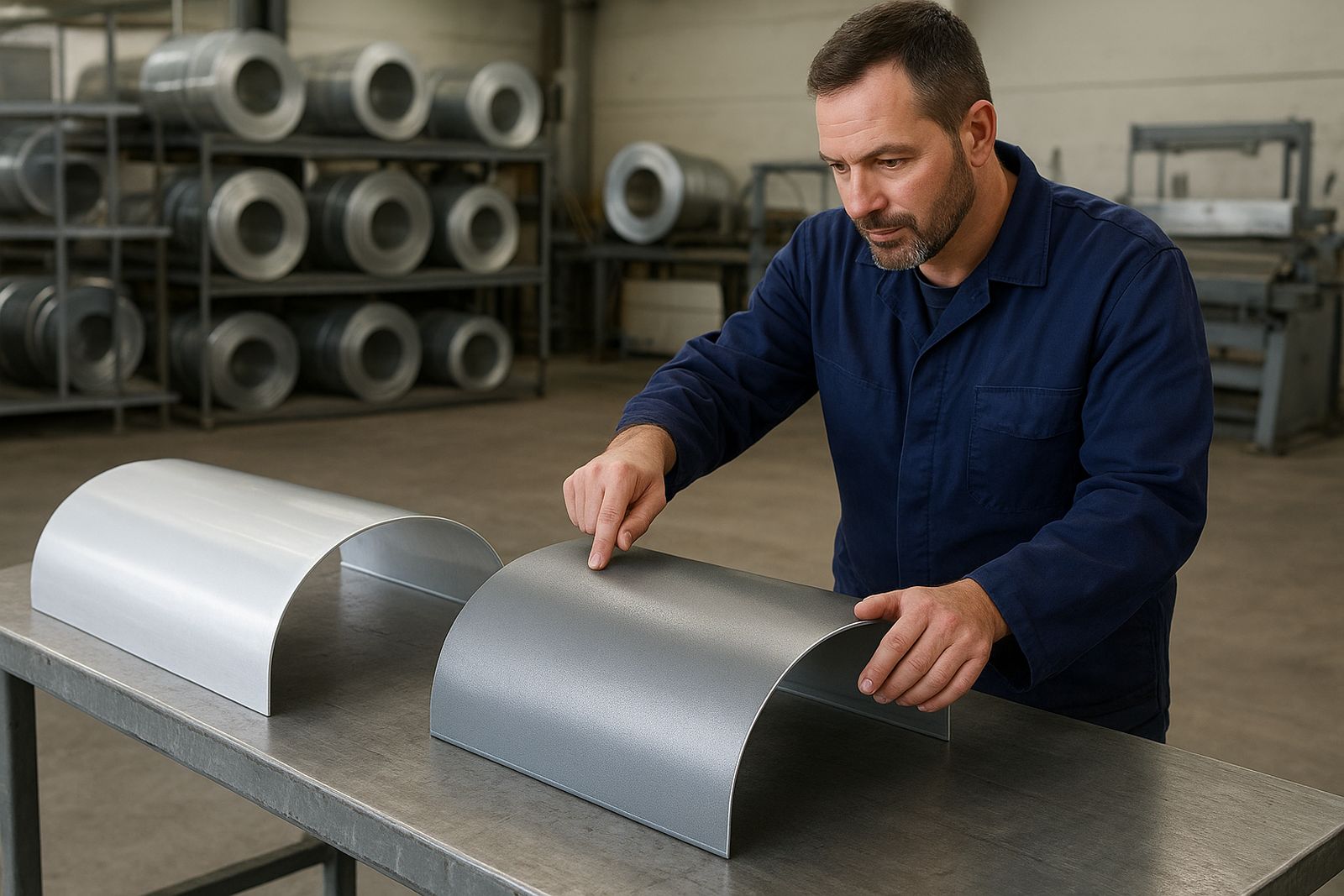
Start with the exposure, not the look
The first question is simple: will the sign live inside a mall, reception, showroom or factory floor, or will it face sun, rain, dust and wind every day? That one answer changes the full build spec. Indoor channel letters can often use lighter materials and finer finishes because they are protected from UV, moisture and salt air. Outdoor work needs more care around corrosion, fastening and surface treatment, especially in Durban, coastal parts of the East Rand and any site near a busy road with dust and grime.
A neat indoor face can be supplied with a lighter backing and cleaner edge detail because the sign is not fighting weather. For exterior work, the same sign may need stronger returns, better sealing and a finish that can take daily temperature swings. If the client wants the letters to stay sharp for years, the build must suit the site, not only the brand artwork. That is where many jobs go wrong, because the quote is based on size only and not on conditions.
Materials that behave well indoors
Indoor channel letters are usually chosen for reception areas, retail floors, office lobbies and display walls. In these spaces you want good visual quality and a clean edge, without overbuilding the sign. Lighter-gauge returns and carefully cut faces can be enough, provided the mounting surface is sound and the lighting is planned properly. If the sign sits close to people, the finish also needs to handle regular dusting and the odd bump from trolleys, cleaning equipment or moving stock.
For indoor use, sign makers often focus on:
- Clean face finish with even light spread
- Low-glare surfaces for bright malls and lobbies
- Lightweight returns where the wall can carry the load
- Mounting systems that allow tidy alignment on plasterboard or cladding
Interior work still needs care during fabrication. Sharp edges, poor edge sealing and weak fixing points will show up fast once the sign is installed. A neat indoor letter should sit straight, read clearly and still look good after a year of cleaning.
Outdoor letters need more than a weatherproof label
Outside, the same channel letter has a much harder life. Sun on the Highveld, coastal humidity, wind-driven rain and general pollution all shorten the life of poor materials. If the sign is for a shopfront in Sandton, a warehouse in Midrand or a forecourt in Pretoria, the finish must resist fading and the structure must stay rigid. Even the best-looking letters can start to fail if the return joins open up or the mounting hardware starts rusting.
Outdoor builds should pay attention to:
- Corrosion resistance on returns, fixings and internal supports
- UV stable face materials and finishes
- Proper sealing around electrical entry points
- Drainage and moisture management where water can pool
- Clear spacing from the wall to allow for maintenance access
On coastal jobs, extra care is needed because salt air gets into small gaps and works on exposed metal. On inland sites, the sun can still be brutal. A letter that looks perfect at commissioning can begin to chalk, warp or discolour if the wrong finish was chosen for the site.
Finish choices that affect lifespan and upkeep
The finish is not only about appearance. It affects cleaning, fading, fingerprints and how the sign ages under real use. A polished indoor surface can work well in a controlled environment, but it may show dust and marks if fitted near a kitchen, loading bay or entrance that gets touched often. Matte and satin finishes can be easier to keep neat in some interior locations, while outdoor jobs usually need finishes that hide small marks and hold colour under UV.
Painted surfaces, wrapped surfaces and exposed metallic finishes all perform differently. The best option depends on the site, budget and maintenance plan. A mall tenant who changes branding often may want a finish that can be updated without replacing the whole sign. A long-term exterior tenant may prefer a finish that gives fewer call-backs and less repainting.
Think about who will clean the sign too. If the client’s staff will wipe it down every week, the surface should tolerate normal cleaning products without dulling. If access is difficult, the finish should be forgiving enough to keep its appearance between services. That saves time and money over the life of the sign.
Lighting, heat and mounting change the specification
Channel letters do not sit alone. The lighting package, heat build-up and wall type all affect whether the sign belongs indoors or outdoors. Indoor signs often run in a more stable temperature range, but you still need to allow for restricted ventilation behind feature walls or within reception cladding. Outdoor letters must handle heat expansion, moisture and dust without stressing the face or loosening the fixings.
Mounting details matter just as much as the visible finish. A light indoor wall may need a different fixing pattern from a cement render wall outside a warehouse. If the sign is going onto insulated panels, glass, brick or aluminium cladding, the installer must plan for the actual substrate. On a job in Midrand or an industrial site in the West Rand, the wall quality can vary from one bay to the next, so a one-size approach usually causes trouble.
Good planning also helps with maintenance. If a letter needs to be opened for servicing, or if the building has access limits after hours, the sign should be installed in a way that makes future work easier. That is especially important for businesses that cannot afford downtime during trading hours.
A local example from Midrand to Durban
We often see the difference on multi-site projects. A client may need reception lettering for a Midrand head office, then a larger exterior sign for a Durban branch facing humidity and salt air. The artwork can stay the same, but the build should not. The indoor version may use a lighter structure with a finer finish, while the outdoor version needs stronger corrosion control, better sealing and hardware suited to exposed conditions.
That split approach is practical for sign makers because it reduces complaints later. The interior sign stays crisp under controlled conditions, and the exterior sign is built for weather from day one. It also helps when training production staff, because they can see why material selection changes from one site to the next. If your team understands the environment first, the sign quality improves and the return visits drop.
For national installs, it also helps to plan spares, service access and transport. A letter that works well in a showroom in Sandton may need a tougher packing and handling method before it reaches an outdoor site in Pretoria or Durban. The final result depends on the whole chain, not just the machine or the face material.
The practical rule for choosing indoor or outdoor spec
The simplest rule is this: indoor signs can be lighter and cleaner, while outdoor signs must be tougher and more protected. But the real decision sits in the details. Look at the building, the cleaning routine, the local weather, the mounting surface and how long the client wants the sign to last. If any of those factors are uncertain, it is safer to spec the sign a little harder than the minimum. That costs more at the start, but it avoids early failure and expensive repairs.
Before you confirm the job, ask these questions:
- Is the sign fully indoors, partly covered, or fully exposed?
- Will the client clean it weekly or only as needed?
- Is the site coastal, dusty, shaded or in full sun?
- What wall type and fixing method will be used?
- How easy will future servicing be?
When those answers are clear, the material and finish choice becomes much easier. The result is a sign that looks right on install day and still looks right after the season changes, which is what clients actually pay for.