

What forecourt sites need from sign letters
Forecourts are judged in seconds. Drivers pass at speed, often in traffic, and they only give a sign one quick look. That means the lettering has to carry the name clearly, without clutter, and still look right after months of UV, coastal salt, dust and pressure washing. On busy sites in Midrand, Sandton or along the N3, the difference between readable and missed can be one poor colour choice or a face that is too small.
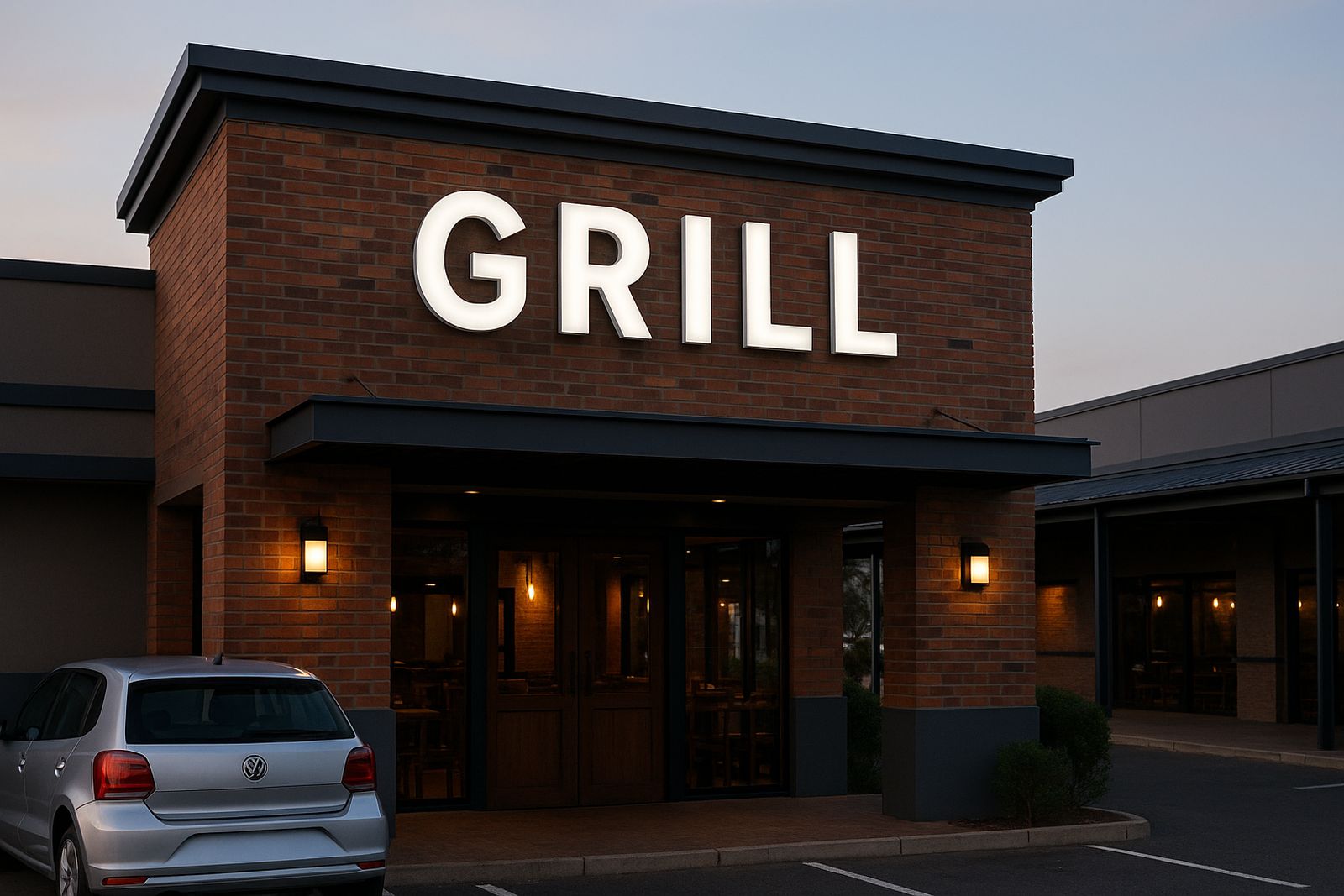
We usually work with sign makers who are building full site identification, pump canopy lettering or roadside pylon faces. The main job is to keep the message readable from a distance while making sure the construction can handle daily weather. For many forecourt installs, that means channel letters with a neat return depth, even illumination where needed and fixings suited to steel, masonry or composite panels.
- Clear letter height for road speed and viewing distance
- Good contrast between face colour and background
- Weather resistance for heat, rain and coastal humidity
- Fixings planned for wind loading and vibration
Typical equipment for this use case
A forecourt package often starts with a channel-letter bending machine, coil stock for returns and matching material for faces and trims. Sign makers who produce for fuel stations or convenience outlets usually want consistent bends, so every letter sits square and the finished sign panel is easy to assemble. If the site uses illuminated letters, the internal build must also allow for wiring space and service access. A tidy build saves time later when a lamp or module needs attention.
Depending on output, many workshops pair the machine with hand tools for trimming, a secure bench area and basic measuring kit. Some teams also keep extra return stock in popular colours so jobs can move faster when a forecourt rebrand lands with short notice. That happens often enough, especially on sites with multiple branches and tight opening dates.
- Channel-letter bending machine sized to your daily volume
- Return coil in standard colours used by local forecourts
- Face material for solid or illuminated letters
- Templates and measuring tools for repeatable sizing
For larger runs, it helps if the workshop layout lets one person feed material while another trims, checks and assembles. That keeps output steady and avoids bottlenecks when a chain store order comes in with dozens of identical letters.
Layout and planning on a forecourt site
Good planning starts with the viewing point. Is the sign meant for vehicles entering from the main road, for pedestrians at the pump island, or for both? Letter size, spacing and mounting height change depending on the answer. A sign on a canopy edge needs a different approach from a free-standing pylon or wall face. On many sites the biggest mistake is fitting letters that look fine up close but get lost from 60 or 80 metres away.
We advise sign makers to confirm the exact panel size before production begins. Measure the available face, the fixing surface and any obstructions such as lighting arms, guttering or service pipes. On coastal sites like Durban, leave room for maintenance access and corrosion protection. In Gauteng, where dust and sudden storms are common, make sure the fixing system can tolerate movement without loosening over time.
- Confirm viewing distance from the road and driveway approach
- Check canopy edges, fascia depth and fixing surfaces
- Allow access for cleaning and future servicing
- Plan cable routes before letters are cut and mounted
If the site must stay open during works, plan the install in phases. Start with off-peak hours, mark out the panel, then fit sections in a way that keeps the forecourt safe for customers and deliveries. That matters on busy sites in Pretoria and the East Rand where traffic cant just stop for a full day.
Common mistakes that cost time and money
The most common issue is under-sizing the letters. Forecourt branding needs a stronger visual presence than an office sign or shopfront name. Another mistake is choosing finishes that look good indoors but fade too quickly in full sun. South African weather is unforgiving, and once a face starts chalking or a return begins to lift, the job becomes more expensive than it should have been.
Another error is poor sequence planning. If the workshop produces the letters before final site checks, installers may find the fixings do not suit the structure or the cable entry points are wrong. That leads to rework, extra transport and delays. We also see projects where the letter spacing is too tight, which makes cleaning hard and can trap dirt on high-traffic sites.
- Letters too small for the road distance
- Finishes not suited to direct sun or salt air
- Fixings chosen before site measurements are confirmed
- Too little space between letters for maintenance
A further problem is weak training. If operators are not shown how to set the machine correctly, returns can vary from one letter to the next. The result is uneven joins and wasted coil. Even a small error on one batch can cause a delay on an urgent forecourt rollout, and no one wants that.
Budget ranges for forecourt lettering in Rand
Budget depends on letter size, quantity, material thickness, finish, and whether the set is illuminated or non-illuminated. For South African forecourt work, small directional or amenity lettering can start around R12,000 to R25,000 for a modest run, depending on specification. Mid-size fascia or canopy letter sets often fall in the R30,000 to R85,000 range. Larger illuminated forecourt branding, especially for multi-site rollouts, can move from R90,000 upward quite quickly.
If a workshop is buying equipment for regular production, the machine choice should match monthly volume. Smaller sign shops may keep the spend lean and focus on a dependable setup that handles local jobs in Midrand, Sandton and Pretoria. Higher-output manufacturers usually need better throughput, more material stock and proper servicing cover so downtime does not eat into margins.
- Entry production setup for smaller runs: from about R80,000 to R180,000
- More advanced production line for regular forecourt jobs: from about R200,000 to R450,000
- Training, commissioning and install planning should be budgeted separately
Where possible, quote both the first install and the spare parts plan. Clients often want fast turnaround after launch, and a few key spares on hand can prevent a shutout if something fails during the opening week.
Support for sign makers working nationwide
Forecourt signage is not just about making letters. It is about getting the site ready, keeping the production clean and making sure the team knows how to maintain the equipment. We support sign makers with operator training, onsite commissioning, preventive servicing, breakdown support, spares supply and remote tech help. That matters whether the job is in the West Rand, Durban or a fast-moving site in East Rand.
Our Midrand base works well for clients who need practical help across Gauteng and beyond. We also help with production coaching, material selection and installation planning so the first run goes smoother. If a forecourt project has a fixed launch date, we can assist with refresher training before production starts, which often saves a lot of stress later on.
- Operator training for new or existing staff
- Onsite commissioning and setup checks
- Preventive servicing to reduce breakdowns
- Remote tech help for urgent production issues
For quotes or support, use our contact form. A short site brief with dimensions, viewing distance and desired finish helps us guide the next step and avoid back-and-forth.