
Why production coaching matters on the shop floor
If your bending machine is doing the right job but the line still feels slow, the problem is usually not one fault. It is a mix of material handling, operator habits, job sequencing, coil choice and how the team handles checks before assembly. Production coaching looks at the full run from order release to finished letter so you can see where time and material are being lost.
For shops in Sandton, Pretoria, Durban or the East Rand, the pressure is often different from week to week. Some jobs need quick turnaround for retail fascias, others need repeat production for a rollout across several branches. We help you standardise the way work moves through the floor so the result is more consistent, less wasteful and easier to repeat when the next order lands.
Good coaching is not theory. It means making small changes that show up in the numbers, such as fewer offcuts, fewer reworks and less waiting around while one step holds up the next.
What is included in a coaching visit
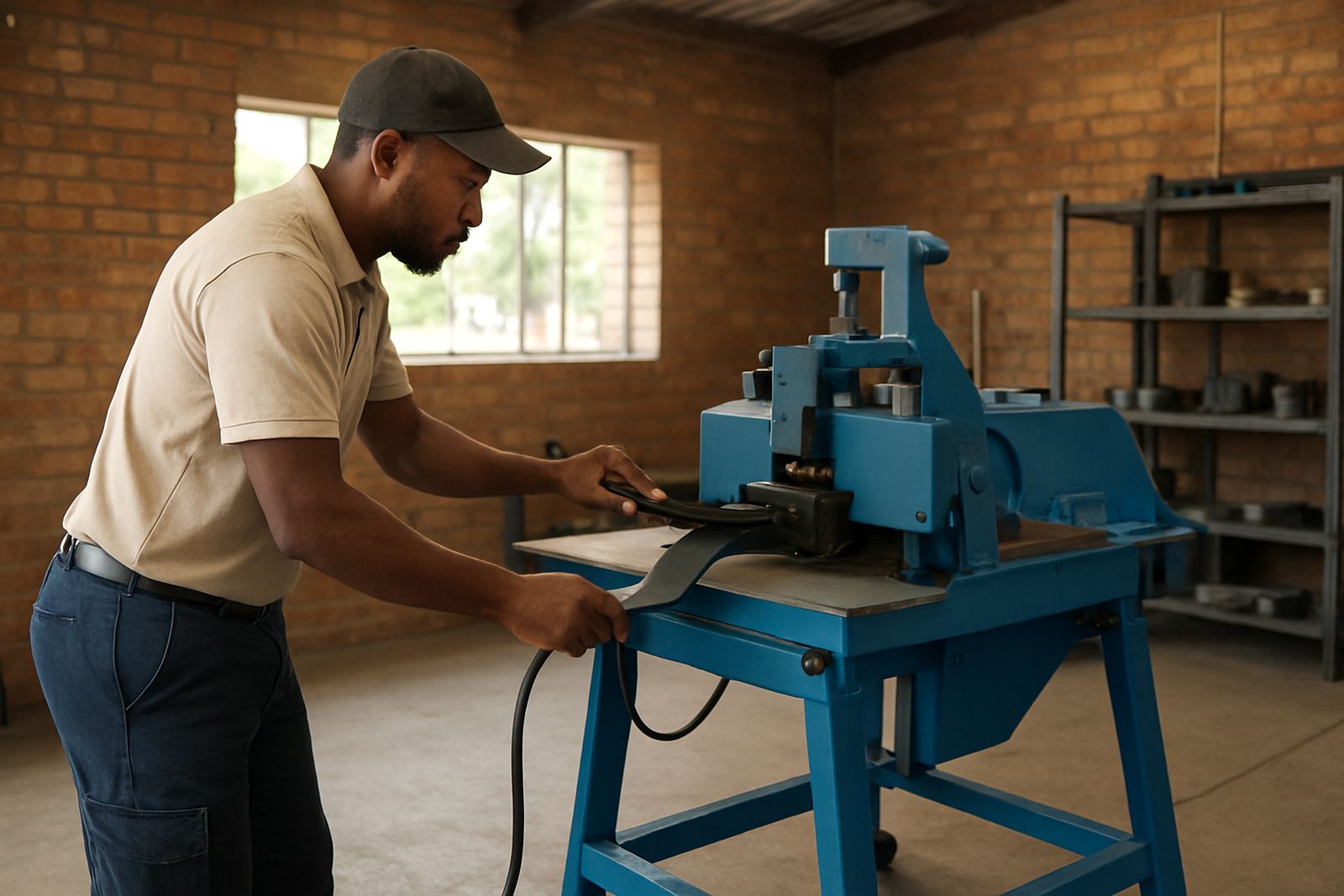
Each session starts with a review of your current production flow, the machine set-up you are using and the type of channel letters you make most often. We look at coil widths, return heights, feeding method, cut-offs, hand tools, templates and how your team moves jobs between bending, trimming, assembly and finishing.
From there we give clear guidance that suits your output target and staff level. That can include machine settings, operator hand positions, coil storage, cutting order, label systems, job batching and the best way to separate standard work from custom work. Where needed we also check how your material is stored in Midrand humidity or coastal Durban conditions, because damp coils and poor stacking can affect consistency.
- Workflow review from intake to dispatch
- Material handling and storage checks
- Operator method review and correction
- Waste reduction and scrap control advice
- Output planning for small and larger runs
- Practical notes for load-shedding and backup planning
Our step-by-step coaching process
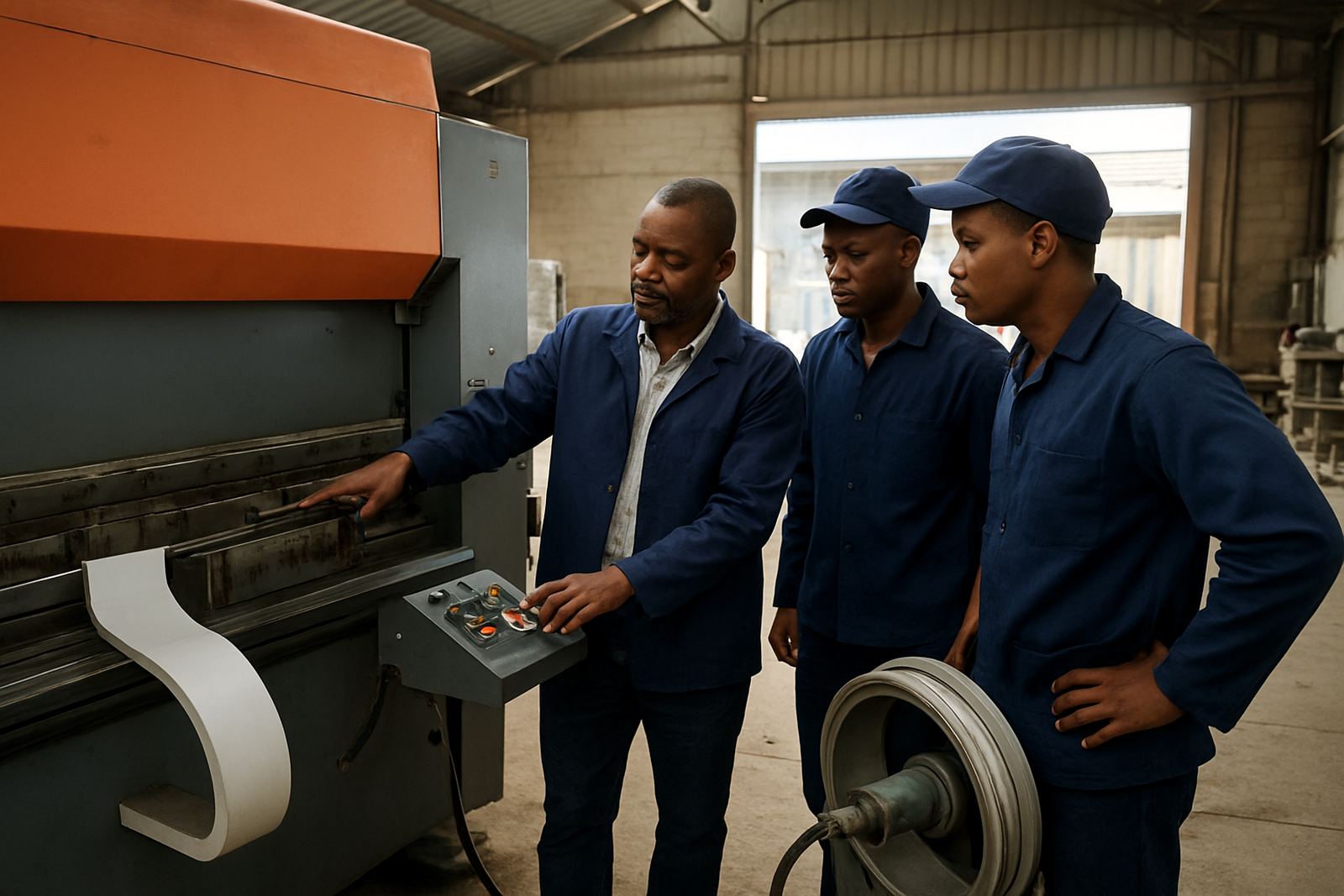
We keep the process simple so the team can use it immediately. First we ask for a short description of your current production issues, whether that is slow changeovers, uneven returns, oversize scrap or too many letters needing rework. If we are visiting your site, we observe one full production cycle and speak to the operator, supervisor and whoever signs off the finished work.
Next we isolate the main bottlenecks. In some shops the problem is layout, with material too far from the machine. In others it is a training gap, where the operator can run the machine but does not yet know how to keep letter quality stable across a full shift. We then give a written action list that can be followed in order, starting with the quickest gains.
- Initial assessment and production discussion
- Floor observation and operator feedback
- Priority list of changes by impact and effort
- Hands-on correction and method demonstration
- Follow-up check to confirm the new process is holding
Throughput, waste and consistency targets
The aim is not to push the machine harder for the sake of it. The goal is to get better output from the same input. On a well-run job, you should see fewer re-cuts, more accurate returns and less movement between the machine and the bench. That is where throughput improves without burning through extra coil or overtime.
We work with shops that make short runs of a few letters as well as higher volume production for franchises and contractors. Coaching can focus on standardising common sizes such as 80 mm, 100 mm, 150 mm or 200 mm returns, making sure the team is using the same reference points each time. When the method is repeatable, the letters are easier to assemble and the front faces sit cleaner at installation.
For many teams the biggest gain comes from simple discipline, like checking coil condition before loading, setting a fixed inspection point before assembly and keeping spare returns cut to known lengths. Small changes save a lot when power cuts, delivery delays or urgent municipal signage deadlines already slow the schedule.
Turnaround, pricing and what affects the quote
Turnaround depends on whether the work is remote, on site or tied to a bigger support visit. A remote review can often be arranged quickly if you need help adjusting a process between jobs. On site coaching normally depends on location, the number of machines, team size and how much of the production line must be observed.
Our pricing approach is practical and based on the scope of time needed rather than vague bundle promises. A small workshop that needs one focused session will not be quoted the same way as a larger factory in Pretoria or the East Rand with several operators and mixed production. If you only need help with one bottleneck, we keep the scope tight. If the job needs follow-up or refresher training, we build that in from the start so the team does not fall back to old habits.
Where travel is involved, we factor in site location and the level of technical input required. You get the price clearly before any work starts.
Maintenance intervals that support better production
Production coaching works best when the machine and the production routine are kept in shape. We recommend routine checks at set intervals so the team does not wait for a breakdown before fixing a problem. For busy shops, a daily start-up check, weekly clean-down and monthly inspection usually pays off quickly.
Intervals should also reflect local working conditions. In coastal areas, fine corrosion can show up sooner. In hot inland workshops, dust build-up and heat can affect feed accuracy. If you are operating through load-shedding, it helps to inspect power stability, back-up supply and restart procedure so operators do not lose time re-setting the line after each interruption.
- Daily: clean machine surfaces, check feed path and confirm stock condition
- Weekly: inspect guides, cutters, hand tools and scrap control points
- Monthly: review output figures, rework rate and operator method
- Quarterly: refresh staff on best practice and update the workflow notes
Who benefits most from this service
Production coaching suits new shops building confidence, established teams chasing tighter lead times and manufacturers that want a more consistent result across different operators. It is also useful after a new machine install, after a staff change or when material costs are rising and every metre of coil matters. If you are already producing regularly in Midrand, Sandton, Pretoria, the West Rand, the East Rand or Durban, small workflow improvements can make a real difference to month-end numbers.
We work in a direct way. No padded reports, no generic advice and no complicated language. Just practical direction that helps your team produce cleaner letters, use less material and keep the job moving.
Key facts
| Service type | Production coaching for channel letter workshops and sign makers |
|---|---|
| Coverage | Midrand base with on site support nationwide |
| Typical formats | Single workshop session, follow-up session, or remote review |
| Output focus | Higher throughput, lower waste, more consistent letter quality |
| Common size ranges | Works well for 80 mm to 200 mm return production |
| Support methods | Workflow review, operator correction, process notes and refresher guidance |