
When remote help is the quickest fix
Remote Tech Help is for the moments when a machine is not behaving as expected and you need answers without waiting for a site visit. It suits new installations, staff handovers, changeovers between coil sizes, and those annoying faults that stop a line mid-job. We work with sign makers in Midrand, Sandton, Pretoria, the East Rand, West Rand and Durban, and we also assist installers and factories anywhere in South Africa.
The service covers phone and video guidance for channel-letter bending machines, coil feed issues, return alignment, control settings, cutter checks, and basic production questions. If the machine is connected to a stable power supply and you can send clear photos or a short video, we can often narrow the problem quickly. That saves time, call-out fees and the risk of running bad material through the machine.
- Setup questions after delivery or relocation
- Fault checks when letters are coming out uneven
- Operating guidance for new staff or relief operators
- Support with material size selection and coil handling
What you can expect during the support session
Each support session is practical and specific. We ask for the machine model, the coil width and thickness, the return size, and a short note on what the operator is seeing on the screen or at the bending head. From there we guide the team through checks in the right order. That may include verifying air supply, checking feed tension, confirming the profile settings, inspecting the cutter, or testing a short sample run at reduced speed.
For sites dealing with load-shedding or unstable power, we also talk through safe restart steps so the machine is not brought back online too quickly after a power cut. In humid coastal conditions, especially in Durban, we often advise on drying, storage and rust prevention because damp coils and electrical faults can show up together.
- Phone call for urgent fault isolation
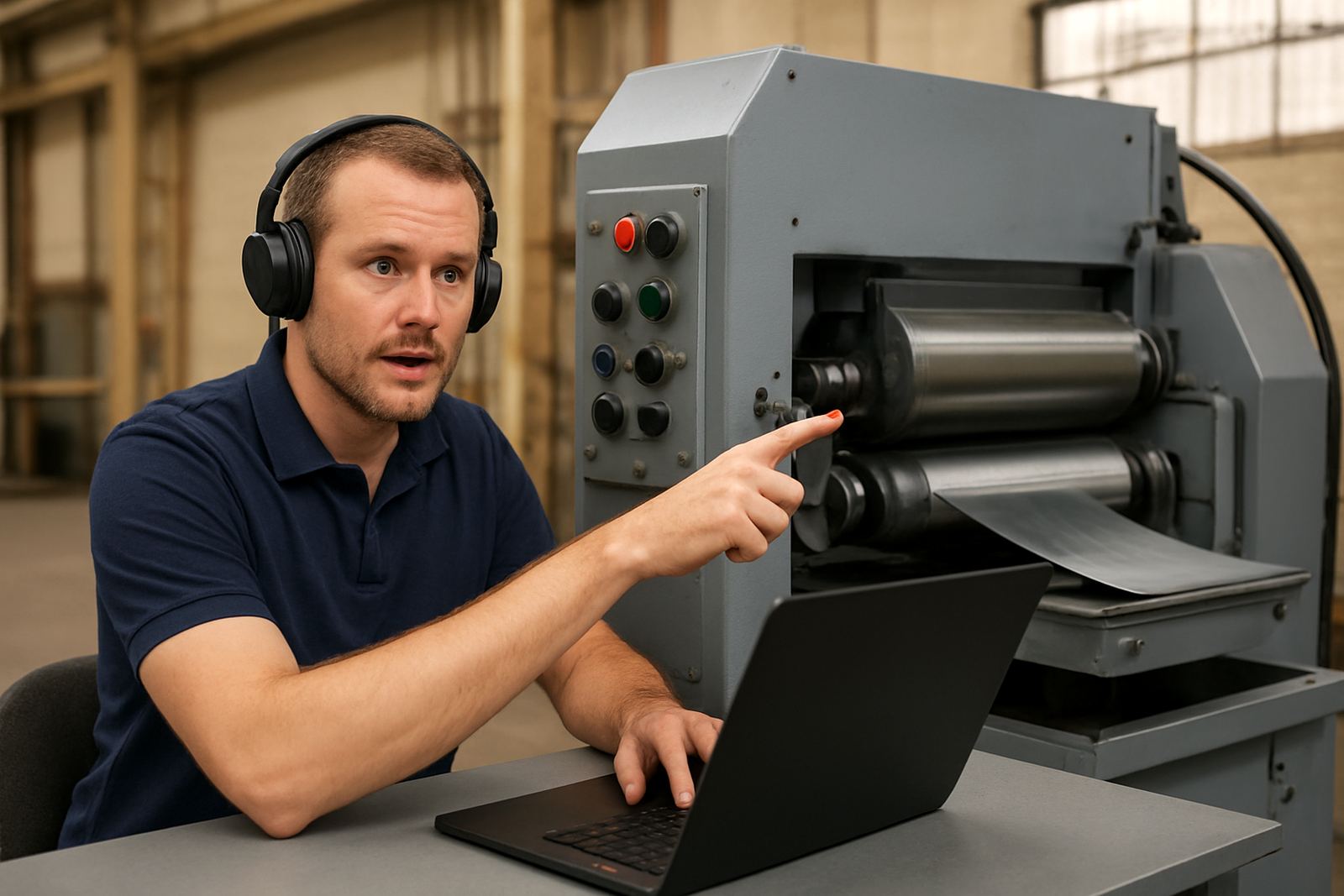
- Video call for live machine inspection and operator coaching
- Photo review of bent returns, corner joins and cut edges
- Clear next steps for the operator or maintenance team
Remote process from first call to problem solved
We keep the process simple so the team on site can focus on production. The first step is to send a short description of the issue through our contact form or call through to the office team. We then confirm the machine type, the material in use, the urgency of the job and whether the issue started after a power failure, a tool change or a new operator taking over. If needed, we schedule a video session at a time that suits the workshop shift.
During the session, one of our technical team members talks the operator through the checks and asks for live feedback. If the fault points to wear, poor setup or a recurring process mistake, we explain what to adjust now and what to monitor over the next few runs. If the matter looks like a parts issue, we can advise on spares supply or arrange a technician visit if remote help is not enough.
- Log the fault and gather a few clear photos or a short video
- Confirm the machine details, material sizes and urgency
- Join the call and work through checks in order
- Apply the fix, then test with a sample run
- Record any follow-up items for the next shift
Pricing approach that suits one-off faults and ongoing support
Remote support is priced to suit the level of help needed, not with a one-size-fits-all charge. A quick fault check costs less than a long coaching session or a full setup review. For regular users, we can structure support around monthly maintenance intervals or production cycles so there is a predictable cost for the workshop. That helps smaller shops manage cash flow and gives larger manufacturers a dependable support line when the line gets busy.
We are upfront about what can be solved remotely and what may need hands-on service. If the problem is likely to need mechanical adjustment, replacement cutters, re-levelling, or power inspection, we will say so before time is wasted. You get practical advice, not guesswork. If the machine is under pressure during a deadline, we can prioritise urgent jobs so the workshop can keep cutting and bending with the least disruption.
- Once-off support for a single machine fault
- Block support for training periods or new staff intake
- Ongoing help linked to servicing and consumable checks
- Escalation to onsite commissioning or breakdown support when needed
Specs we work with during remote checks
To give accurate advice, we work with the machine and material details listed below. These specs matter because a return that is 0.2 mm out can affect the fit on a full sign face, especially on long runs or when using mixed coil batches. We also check airflow, supply voltage and the condition of the cutting parts where relevant.
- Return height range: 10 mm to 150 mm, depending on profile and letter size
- Coil thickness range: 0.4 mm to 1.2 mm for most sign applications
- Material widths: commonly 20 mm to 300 mm, subject to machine setup
- Power supply: single-phase or three-phase, confirmed before any restart guidance
- Air supply: clean, dry compressed air at the required workshop pressure
- Output checks: straightness, corner finish, repeat length, and feed accuracy
Where a workshop is using more than one operator, we can also compare settings between shifts so the machine is not being run differently by each person. That is a common cause of inconsistent returns and wasted coil.
Keeping the machine steady between support calls
Remote Tech Help works best when the machine is looked after between sessions. We usually recommend a simple maintenance interval based on production volume. Light-use workshops should check the machine weekly, while busy production floors may need daily cleaning and a more detailed inspection every month. In coastal areas, or where dust is heavy, a shorter interval is often better. Preventive servicing makes later fault finding much easier.
Good upkeep includes cleaning chips and offcuts, checking cable and hose routing, confirming cutter sharpness, and making sure the coil feed path stays free of burrs. If a machine starts requiring repeated correction on the same setting, we advise logging the issue rather than pushing through job after job. That record helps us trace whether the cause is material, operator handling, or a wear point on the machine. A small note book on the shop floor helps more than people think.
- Weekly: clean feed path and inspect visible wear points
- Monthly: check cutter condition, alignment and test output
- After power cuts: confirm restart sequence and control settings
- After staff changes: refresher guidance for the new operator
Key facts
| Support method | Phone and video assistance |
|---|---|
| Main use | Setup questions, fault checks and operating guidance |
| Coverage | Midrand base with nationwide support |
| Typical machine range | Channel-letter bending machines and related coil handling equipment |
| Response focus | Fast diagnosis, safe restart steps and production continuity |
| Follow-up options | Onsite commissioning, preventive servicing, spares supply and refresher training |