
Why handling matters before a sign reaches the wall
Most sign problems do not start at the final install. They start when a finished letter gets knocked in the back of a bakkie, when a coil edge is bent on a pallet, or when returns are stacked too tightly in the workshop. Once a panel has a crease or a face has been scratched, the repair cost can be higher than the delivery cost.
In South Africa, the trip can be short or long. A set of letters may go from Midrand to Sandton the same morning, then on to Pretoria or the East Rand by afternoon. Others are sent to Durban or the West Rand where road vibration, heat and humidity all affect how material holds up. Safe handling keeps the product looking clean and keeps installation crews from fighting avoidable damage.
Packing finished channel letters for transport
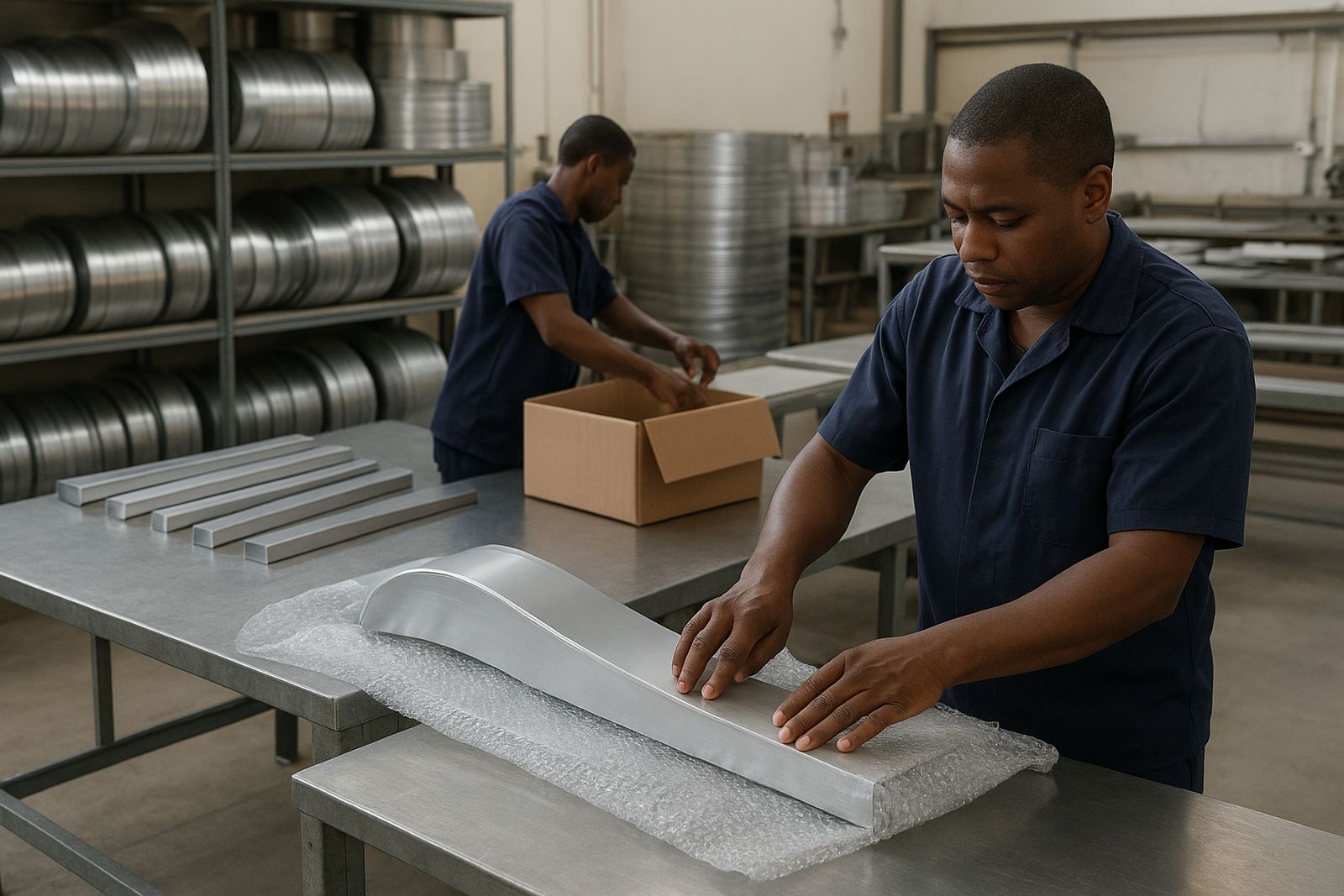
Finished letters should be packed as though they will be turned, lifted and shifted a few times before they are unpacked. If a unit can move inside the box, it will. That movement marks the surface, loosens fixings and can twist returns, especially on larger illuminated letters. Use packaging that holds each letter firmly and leave enough protection between the face and the outer wrapping.
- Wrap each letter so metal edges cannot rub against one another.
- Keep front faces separated with soft padding, not loose scraps that slide around.
- Label cartons clearly by project, sequence and orientation.
- Keep screws, trims and loose fittings in one marked packet per sign.
- Stack only to a height that the lowest carton can carry without crushing.
For taller letters, separate them into manageable groups rather than forcing everything into one oversized load. It is easier to carry two lighter bundles than to rescue one heavy pack that has shifted in transit.
Moving coils and returns without damaging the edges
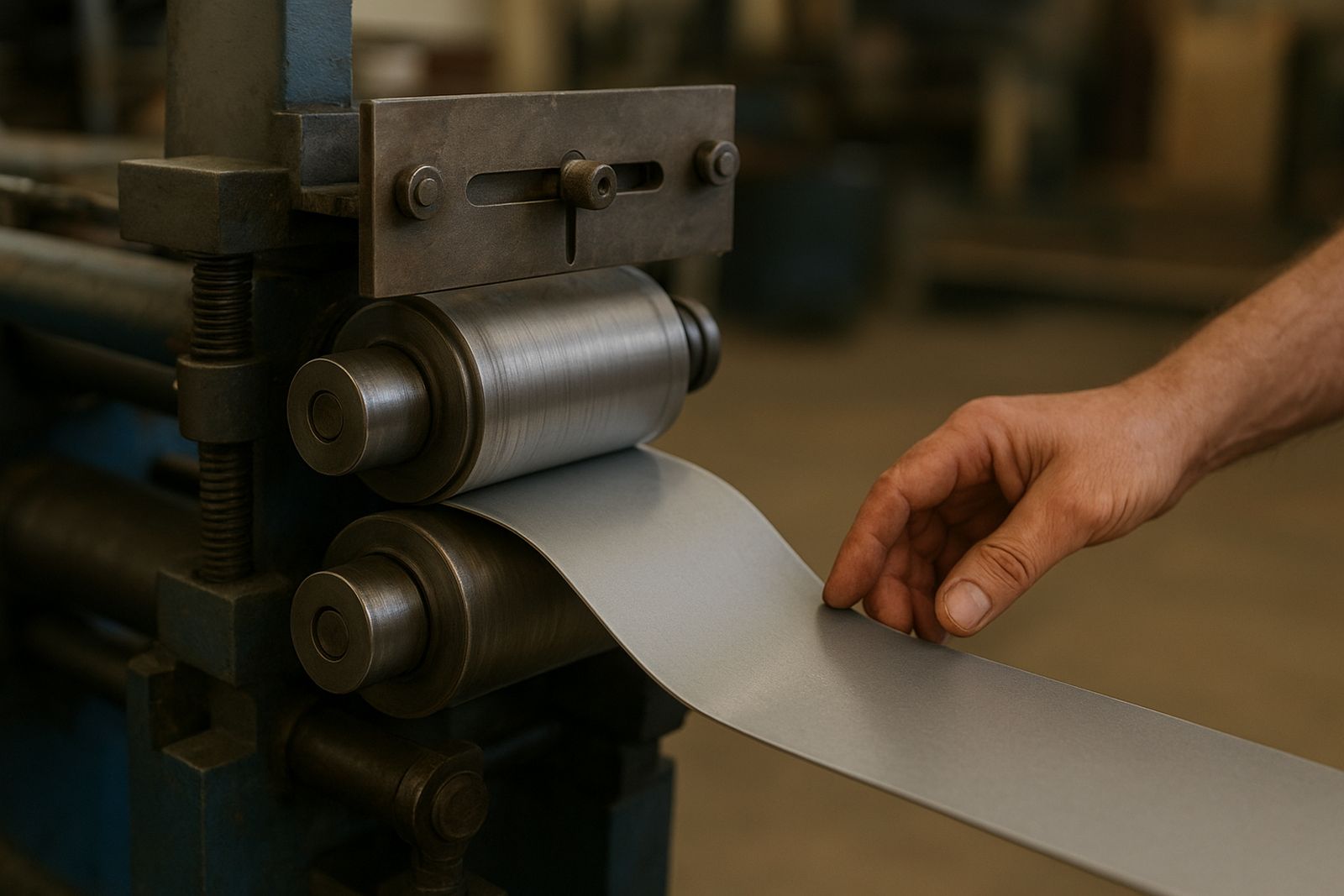
Coils and return stock need a different approach. They are long, flexible and easy to dent if they are dragged across concrete or laid on uneven metal racks. Keep the coil supported along its full length, especially when it is opened for cutting. If one end hangs while the rest of the roll stays tight, the outer layer can kink and the finish suffers.
Returns should be handled with gloves where possible because sharp edges can damage both the material and the operator. In humid coastal areas like Durban, covered storage is important too. Moisture on bare metal can leave marks and make the next stage of production harder, particularly if the stock sits overnight before use.
- Store coils on level racks, not directly on the floor.
- Keep sharp tools away from wrapped stock until the cut is ready.
- Do not drag return material across paved yards or workshop tiles.
- Use two people for longer lengths so the load stays straight.
- Separate different colours and finishes to avoid mix ups.
Loading a bakkie or courier vehicle the right way
A safe load is not only about weight. It is about balance, access and how the pieces will behave when the vehicle brakes suddenly or takes a rough road. Place the heaviest cartons low and near the cab where possible. Keep fragile sign faces upright and never let metal stock slide against them. If the route includes taxi traffic, speed humps or stop start travel through city centres, tie-downs matter just as much as padding.
For smaller workshop deliveries in Midrand or Pretoria, a clean bakkie with side support rails is often enough. For larger site drops, make sure the load plan is set before the vehicle arrives. Unplanned unloading on a busy pavement can lead to scratches, lost hardware and arguments with security or municipal officials over where materials can be placed.
- Check that straps are tight but not cutting into finished faces.
- Leave space for safe unloading at the site gate or loading bay.
- Keep paperwork, labels and hardware accessible at the top of the load.
- Protect the load from rain, dust and sun with proper covers.
Site handling from the van to the wall
Once the load reaches site, the next risk is the short carry from vehicle to wall. This is where good sign work can still get damaged by a corner, a stair rail or a concrete step. Plan the path before anything is lifted. Check whether the client has a lift, whether the access road can take the vehicle, and whether there is enough room to turn large sign sections without scraping them.
A practical example is a retail fitout in Sandton where the front letters arrive early morning and the install team has only a narrow delivery bay. If the crew does not assign one person to guide the path and another to carry, a letter can catch on a door frame or light fitting. The same applies on factory sites in the East Rand, where forklifts, pallets and low roofs create their own set of hazards.
When the site is uneven or the weather turns, slow down. Wet paving, dust and poor lighting make it easier to slip and harder to see a corner edge. A few extra minutes spent carrying by hand can prevent a complete remake.
Checks, training and support that keep jobs moving
Handling improves when the workshop uses the same method every time. That means a clear packing routine, a shared unloading process and staff who know how each material should be lifted. Training also helps new team members understand the difference between a light decorative letter and a heavy production run that needs two people and better bracing.
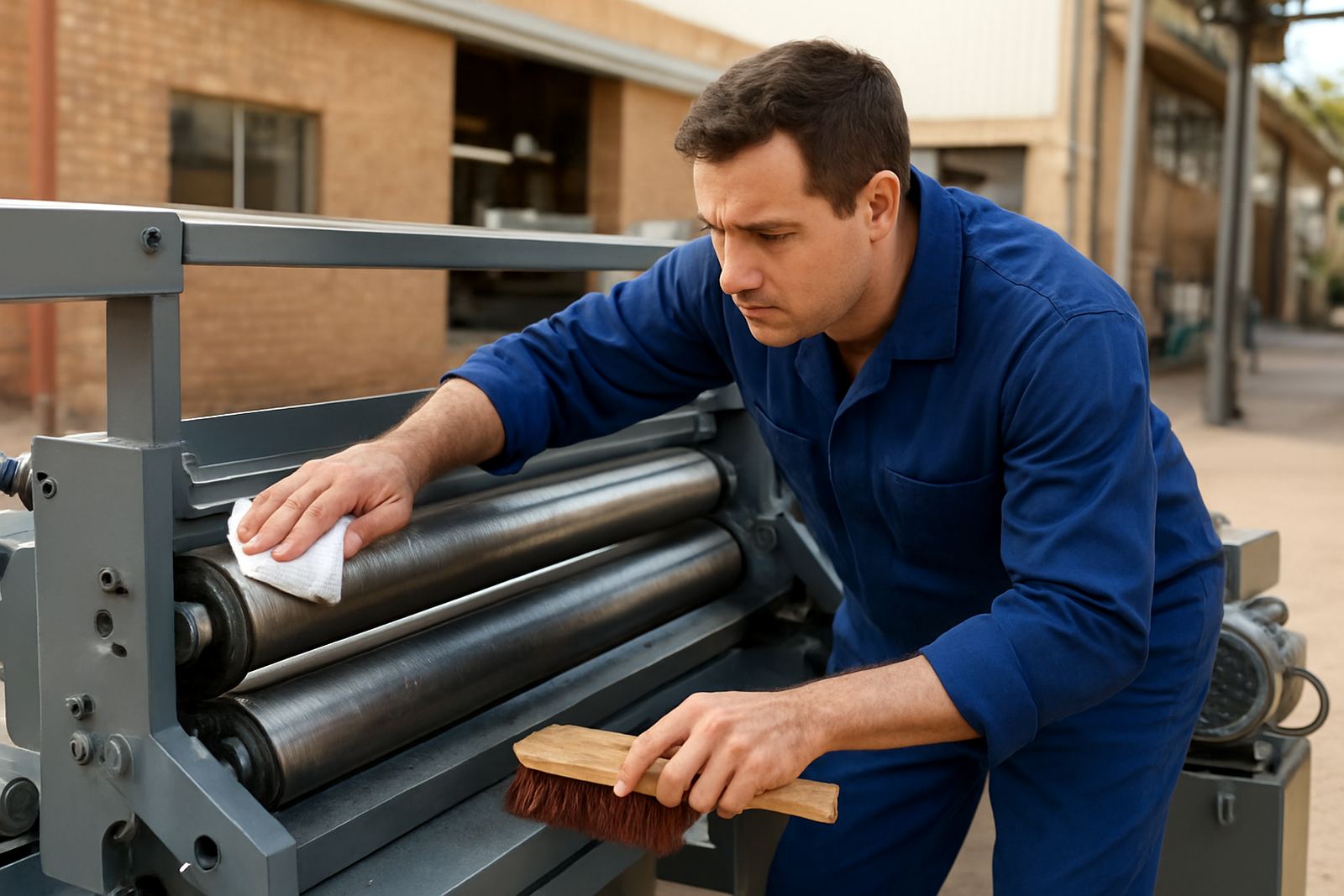
Where operators are still learning, refresher sessions can cover packing order, carton marking, coil storage and safe site movement. Preventive servicing on bending equipment also helps because machines that stay aligned produce cleaner parts that are easier to pack and install. When a job has a tight deadline, simple habits save hours. That is just good business.
- Set one handling method for the workshop and keep to it.
- Inspect cartons and covers before every delivery.
- Record any dents or scuffs before the vehicle leaves.
- Keep spare packaging, straps and corner protection in stock.
- Plan for load-shedding with charging, lighting and lift equipment ready.
If your team needs help with delivery planning, installation planning or operator training, it is worth getting the basics right before the next run. The safest sign is the one that arrives in the same condition it left the workshop, no surprises.