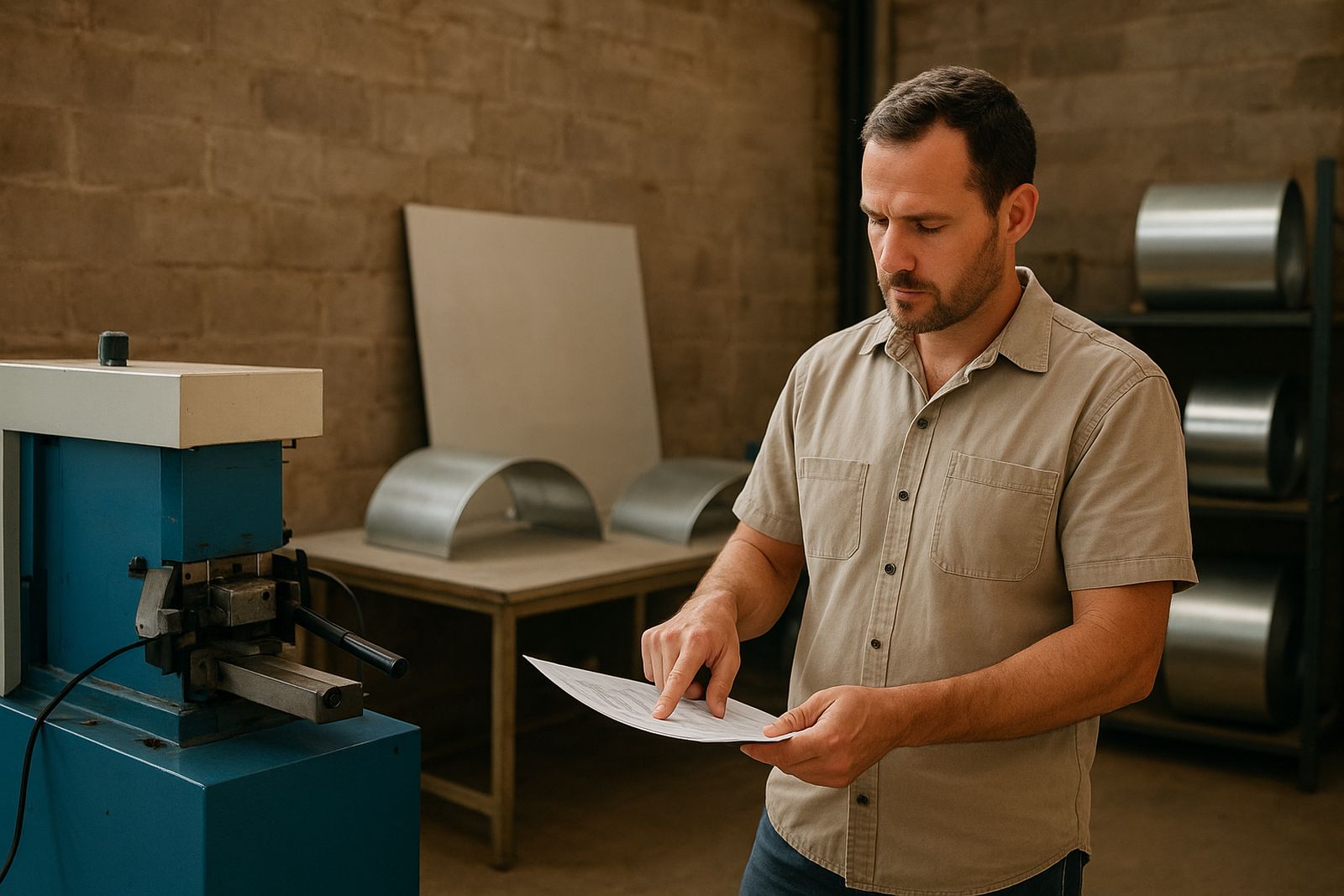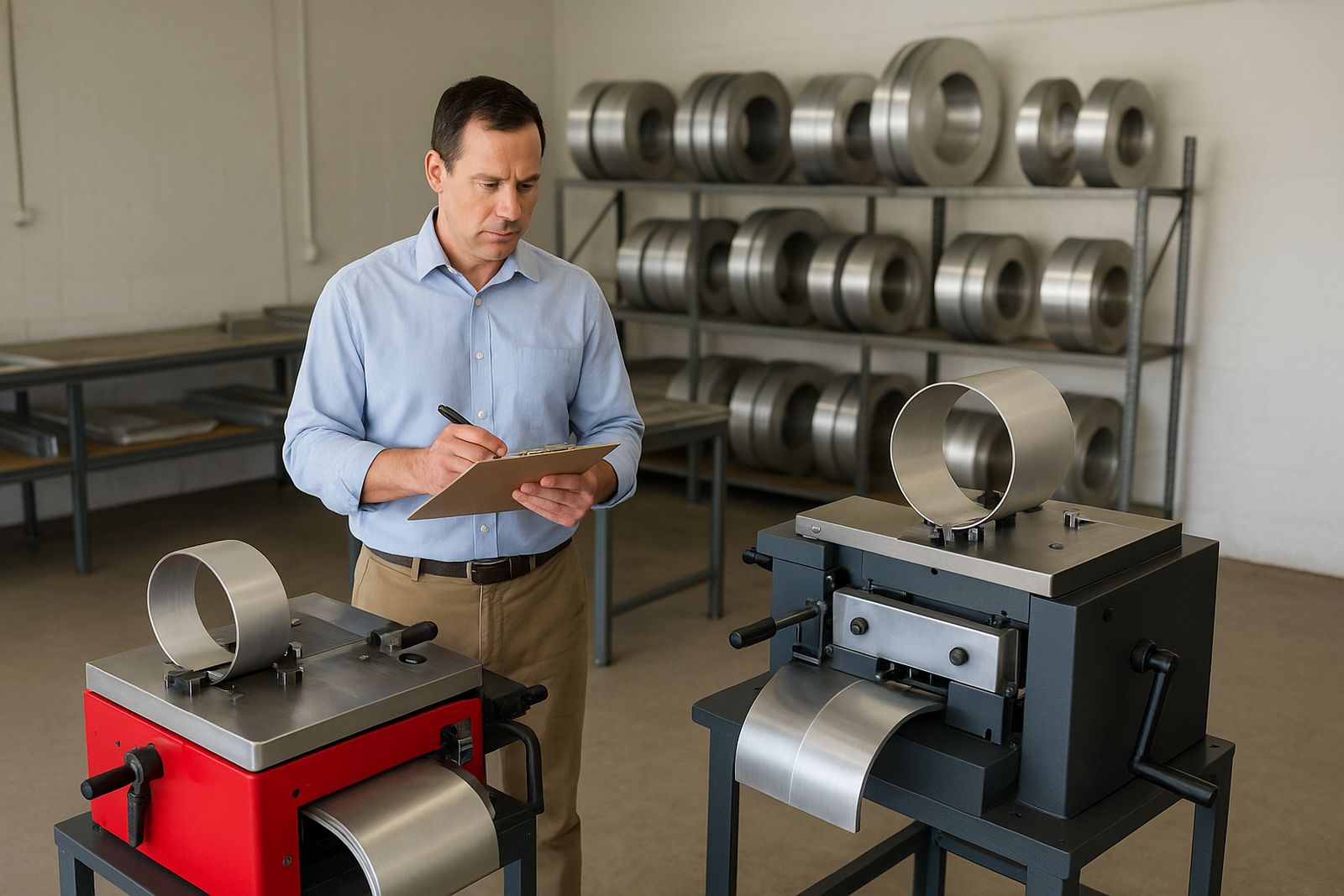

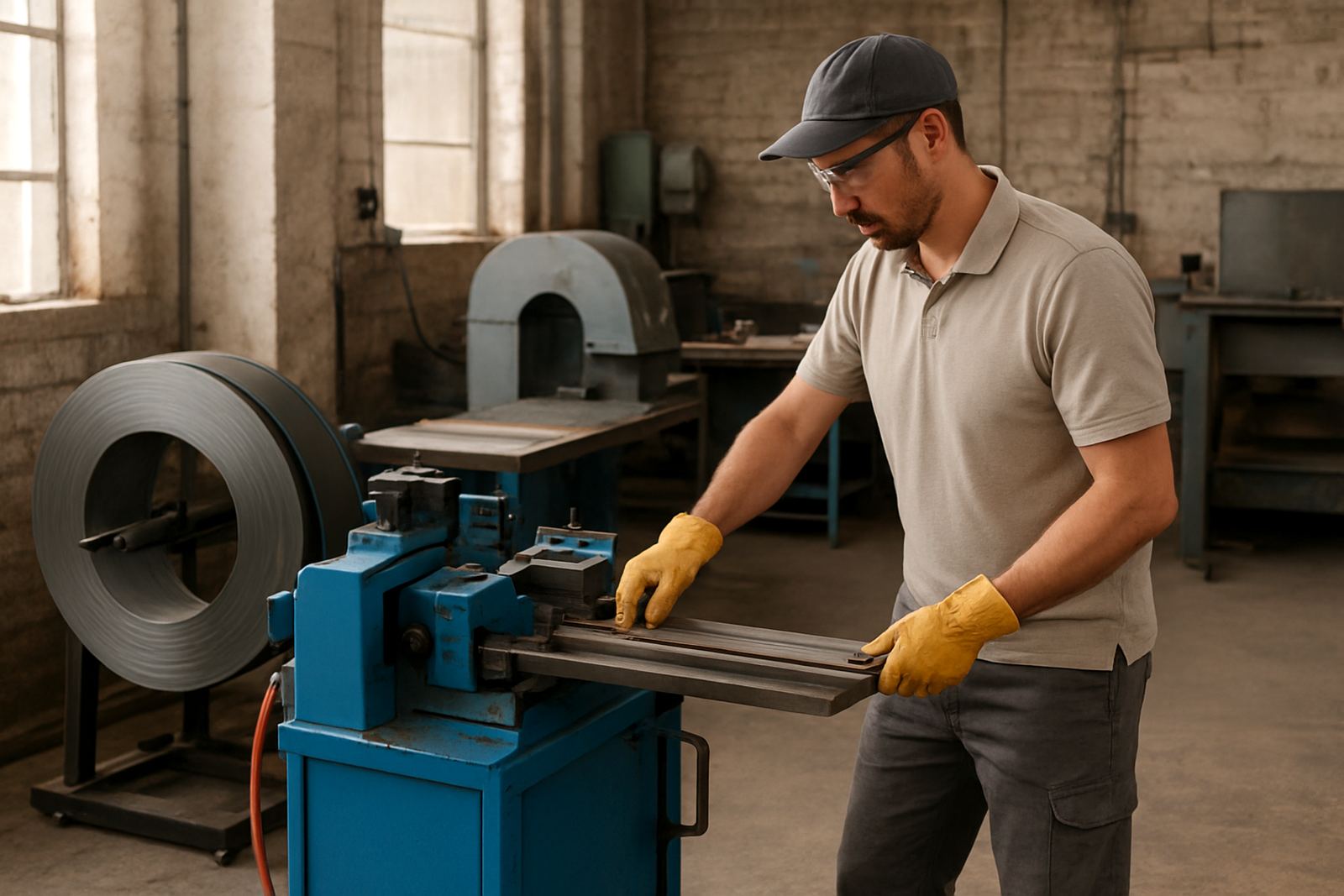
Why machine room safety starts with layout, not just rules
A safe machine room begins with how the space is arranged. If operators have to step around stock, squeeze past carts, or reach across active equipment, accidents become part of the day. Keep the path from receiving to cutting, bending, assembly and packing as direct as possible so people do not carry long pieces through tight corners or over open work areas.
In a Midrand workshop, where deliveries often arrive through the day and jobs may be split between in-house production and site work, layout matters even more. Coils, returns and offcuts should each have a fixed place. Nothing should live on the floor if it can be racked, hung or boxed. Good flow reduces mistakes, saves time, and makes it easier to spot a problem before it becomes a injury claim or a ruined job.
- Mark walkways clearly and keep them free of packing, cable reels and scrap.
- Store heavy coils and sheet material at a safe lifting height.
- Separate raw material, work in progress and finished signs.
- Keep fire exits and electrical boards fully accessible at all times.
Guard moving parts and stop hands from doing the machine's job
Most workshop injuries happen when somebody reaches too close to a moving component, tries to clear a jam too soon, or uses a tool that does not belong near the machine. Operators should know exactly where pinch points, rollers, blades and feed paths are, and they must never bypass guards because the job is urgent. A few seconds saved is not worth a damaged hand or a bent machine.
Clear start and stop procedures matter as much as the physical guards. Every machine should be shut down properly before cleaning, adjustment or blade changes. If more than one person works on the same unit, agree on a hand signal or callout before anyone puts fingers near the moving section. Training must be practical, not only a sign on the wall. People remember what they do with their hands far better than what they read once.
- Test emergency stops during routine checks.
- Use the correct tools for clearing waste and adjusting settings.
- Never wear loose sleeves, scarves or jewellery around moving equipment.
- Check that guards and covers are refitted after servicing.
Treat coils, returns and offcuts like load-bearing material
Sign-making material looks harmless until a coil slides, a long return bends under its own weight, or an offcut catches an ankle. Coil handling should be planned with the same care as lifting machinery parts. Use two people for long or awkward lengths, especially when working in a busy shop or when the floor is dusty. If the material twists on the way to the machine, the operator may try to correct it by hand while the equipment is already running.
Store coils upright or on proper racks and keep return stock supported so edges do not deform. Sharp cut edges should be de-burred or banded before moving the pieces across the shop. In coastal areas like Durban, humidity can also affect how stock behaves, especially when it sits near an open roller door. Moisture, dust and heat all make handling less predictable, so stock should be kept dry and off the concrete where possible.
- Use gloves suited to sharp edges, but do not rely on gloves for grip around rotating parts.
- Keep long stock supported at both ends during transfer.
- Inspect racks and stands for bending, rust or loose fasteners.
- Label material by size and thickness so the wrong stock is not pulled in a rush.
Keep production flow clear when deadlines are tight
Most safety shortcuts happen when the shop is under pressure. A machine room that runs on guesswork will eventually run into people, stock or power problems. The fix is to build a production flow that shows what enters next, what is being worked on, and what must wait. Even a simple whiteboard or job card board helps the team avoid crowding one station while another machine sits idle.
When load-shedding hits, rushed restarts are a real hazard. Operators may switch equipment back on too quickly, forget to check alignment, or restart with a partially completed setup still in place. Build a restart routine that includes a walk-around, a quick machine test, and a fresh check on material position. If the workshop uses remote tech help, keep a current contact list near the main board so faults can be reported without delay and without guesswork.
- Restart machines in a fixed order after power interruption.
- Confirm that no tools or loose parts are left inside the work area.
- Keep a written schedule for high-priority jobs and machine time.
- Separate urgent work from training or test runs so neither gets rushed.
Cleaning and servicing are safety tasks, not spare-time tasks
A machine room that is cleaned properly is usually safer than one that only gets attention after a breakdown. Dust, slivers, adhesive residue and metal offcuts can clog sensors, affect movement and make a floor slippery. Daily cleaning should be light but consistent, while preventive servicing should check wear points, alignment and lubrication before a fault stops the line.
Technicians and operators should both know which parts are safe to clean and which must only be handled by trained staff. If a guard must come off, the machine needs to be isolated first. That sounds basic, but it is often where people cut corners. A small workshop in Pretoria, for example, can lose a half day simply because one jammed feed was cleared without checking the rest of the setup, and then the next sheet went in skew. One mistake becomes three. Better to stop, inspect, then continue.
- Schedule short cleaning stops during the day instead of one big end-of-day rush.
- Keep brushes, cloths and vacuum tools in the machine room.
- Log repeated faults so servicing can target the real cause.
- Replace worn cutters, belts and guides before they fail on a live job.
Train every operator the same way, then refresh it often
Safety standards slip when only one person knows how the machine should be run. If the lead operator is off site, the rest of the team may improvise. That is why operator training, refresher training and production coaching matter. Everyone should know the setup steps, the shut-down sequence, what noise or vibration is abnormal, and when to call for help instead of pushing through.
Training should include real material, not only theory. Show staff how to move coils safely, how to check returns before feeding them in, and how to read the job flow so nobody is blocked at the machine. In busy areas like Sandton or the East Rand, where clients may want fast turnaround, good training keeps the workshop steady even when the order book is full. A calm team with clear habits will always beat a rushed team with good intentions.
- Train new staff before they work unsupervised.
- Refresh safety routines after any breakdown, near miss or machine change.
- Record who was trained on which machine and when.
- Keep the team short and specific notes near each station.
A safer room makes better signs
Machine room safety is not a separate exercise from production. It is part of consistent output, cleaner edges, fewer faults and less wasted material. When the workshop is organised, the operators are trained, and the machine checks are done on time, the whole sign-making process becomes easier to manage. That is good for small shops in Midrand and just as useful for larger manufacturers working across Gauteng, Durban and beyond.
Safe habits also help during installation planning. A sign that leaves the shop in good order is easier to transport, handle and fit on site. Less damage in the workshop means fewer call-backs later. Keep the room tidy, keep the procedure simple, and make sure everyone knows what safe work looks like before the day gets busy.