
When the hand-finishing starts eating your day
Most workshops do not upgrade because a machine stops completely. They upgrade because small issues keep adding up. You spend too much time trimming returns, correcting tight corners, or re-running letters that should have been right the first time. That is usually the first sign the setup is no longer matching the volume coming through the door.
If your team is still finishing every second job with pliers, files and a lot of patience, the bottleneck is probably in bending and forming rather than in layout or fixing. A better machine does not remove skill, but it cuts out the repeated corrections that waste man hours and push up your labour cost.
For a shop in Midrand handling work for Sandton offices and Pretoria retail sites, those delays show quickly. A simple five-minute fault on each letter becomes a full day by the end of the week, and that affects turnarounds on installs too.
Signs your current output no longer matches demand
A workshop often outgrows its equipment long before the owner admits it. The clearest signal is when the machine can still run, but only at a slower pace than the orders need. You may also see uneven return heights, inconsistent corner quality, or more material offcuts than before.
- Jobs are backing up even when staff are on time and working full shifts
- Experienced operators are spending time correcting simple bends
- The same profile behaves differently on different days or coils
- Thin returns are collapsing on handling or during transport
- You are turning away larger orders because the line cannot keep up
These are not just machine issues, they are business signals. If a machine cannot maintain repeatable output, it limits how far you can quote with confidence. That is where a more capable bending setup starts to make sense.
What a better bending setup changes in practice
Upgrading is not only about speed. It is also about consistency, material control and fewer surprises during install. A more capable machine should give you cleaner returns, better control on tight radii, and more repeatable output from coil to coil. That means less fiddling on site and fewer last-minute call backs.
It also helps when power supply is not ideal. In many parts of South Africa, load-shedding still affects planning, so workshops need equipment that is efficient and practical to run around generator use or inverter support. If the machine is easier to set up and less sensitive to small variations, the team can keep production moving without constant restarts.
In coastal areas like Durban, humidity also affects how material handles and stores. A better setup, paired with proper material selection and storage discipline, can reduce problems with finish quality and handling. Small things add up, and a good machine makes them easier to control.
The point where repair cost starts looking like replacement
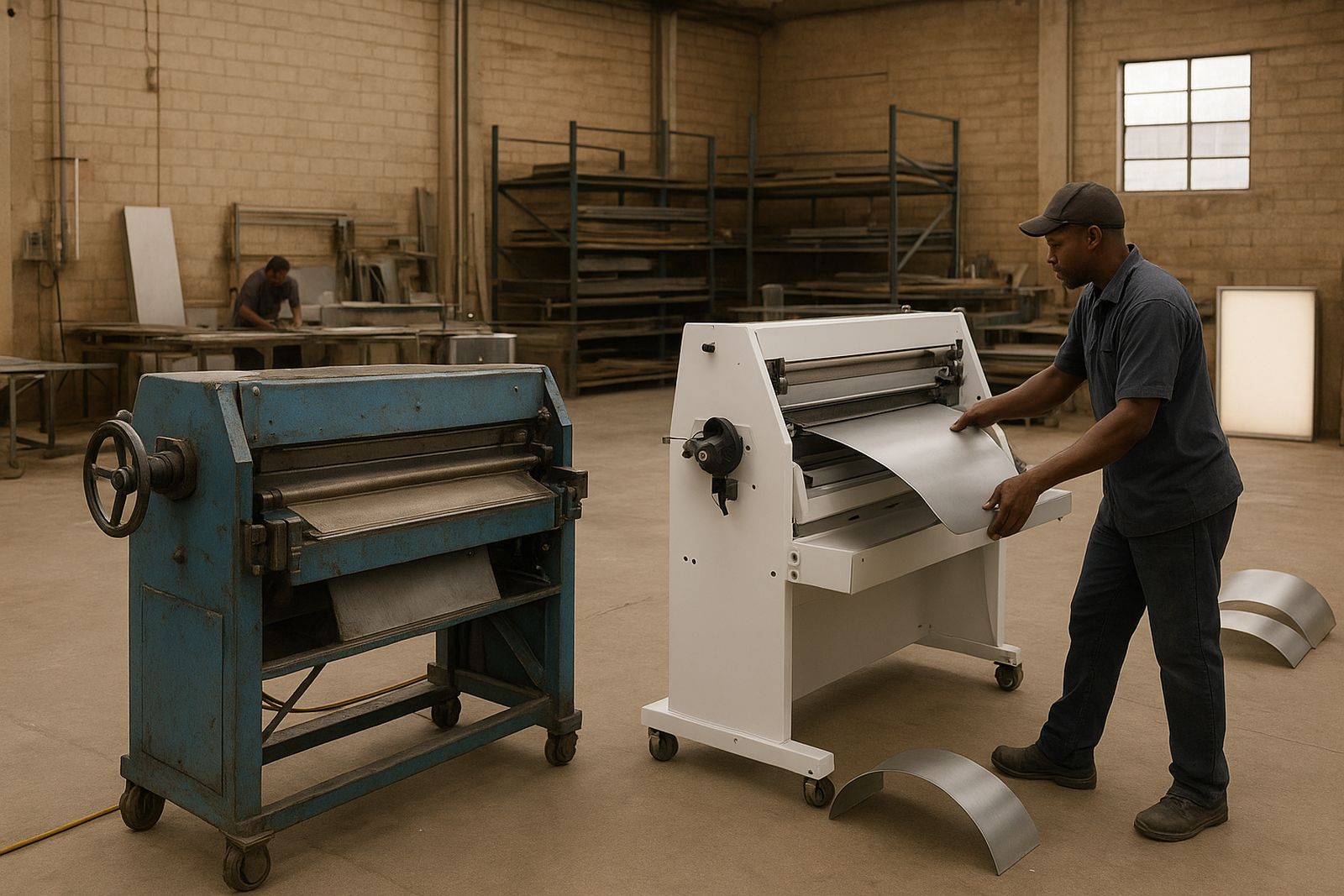
Every machine needs servicing, but there comes a point where breakdown support becomes a standing line item. If you are ordering spares often, calling for technical help more than once a month, or losing production time while waiting for a fix, it may be cheaper to upgrade than to keep patching the same system.
Look at the numbers over six to twelve months. Add up the cost of lost production, spare parts, emergency callouts, and overtime used to catch up. If the total is close to the finance cost of a newer machine, the decision becomes clearer. It is not only about today’s repair, it is about next quarter’s capacity.
Some owners keep a tired unit running because it is familiar. That is understandable, but familiarity does not pay wages. A machine that is costing you work, and maybe a bit of patience too, should be reviewed properly.
- Frequent stoppages during peak production periods
- Operators needing repeat training on the same faults
- Electrical or control issues that keep returning
- Higher scrap rates even with careful setup
When growth plans point to a stronger machine
Sometimes the upgrade decision is not caused by failure, but by growth. If you want to move from small runs to steadier production, or from local work into nationwide sign-maker installs, your bending setup needs to support that step. A shop that wants to supply contractors in the East Rand, West Rand and beyond cannot afford slow changeovers and inconsistent output.
Training also matters here. A more capable machine works best when the team knows how to set it up, select the right material, and plan jobs sensibly. Operator training, refresher training and production coaching all reduce the learning curve and help newer staff avoid expensive mistakes.
If the current process depends on one experienced person who knows all the tricks, that is a risk. A better setup should make the process easier to repeat, so the business is not held together by one individual and a lot of luck.
A practical Midrand example from quote to install
Take a Midrand workshop that started with simple local signs and now handles regular work for offices in Sandton, Pretoria and the East Rand. At first, the team could manage with a basic setup because orders were small and deadlines were looser. Then the work grew, installs started stacking up, and the machine became the slowest part of the process.
After looking at the output, the owner found that a large part of each day was going into rework. The team had enough skill, but the machine was forcing them into extra trimming and correction. Once they planned an upgrade properly, along with installation planning and preventive servicing, the workshop could quote more confidently and turn jobs faster. It was not magic, just better matching of tool to workload.
That is the real test. If your production plan keeps colliding with the limits of the machine, it is time to step back and assess the next stage.
How to decide before the pressure gets too high
Do not wait for a full breakdown before making the call. Review your current output, your scrap rate, and how much time your operators spend correcting finished letters. Then compare that with the work you expect over the next 12 months. If your pipeline is growing, but the machine is still behaving like it is under size, the case for upgrading is strong.
A good supplier should help with material selection, remote tech help, onsite commissioning and breakdown support after the move. That matters because a machine is only useful if it is set up properly and the team knows how to keep it productive. The upgrade decision should be practical, not emotional.
When the numbers, the workload and the workshop reality all point in the same direction, the answer is usually clear. Upgrade before the delays start costing you jobs, not after.