
What estate signage usually needs to do
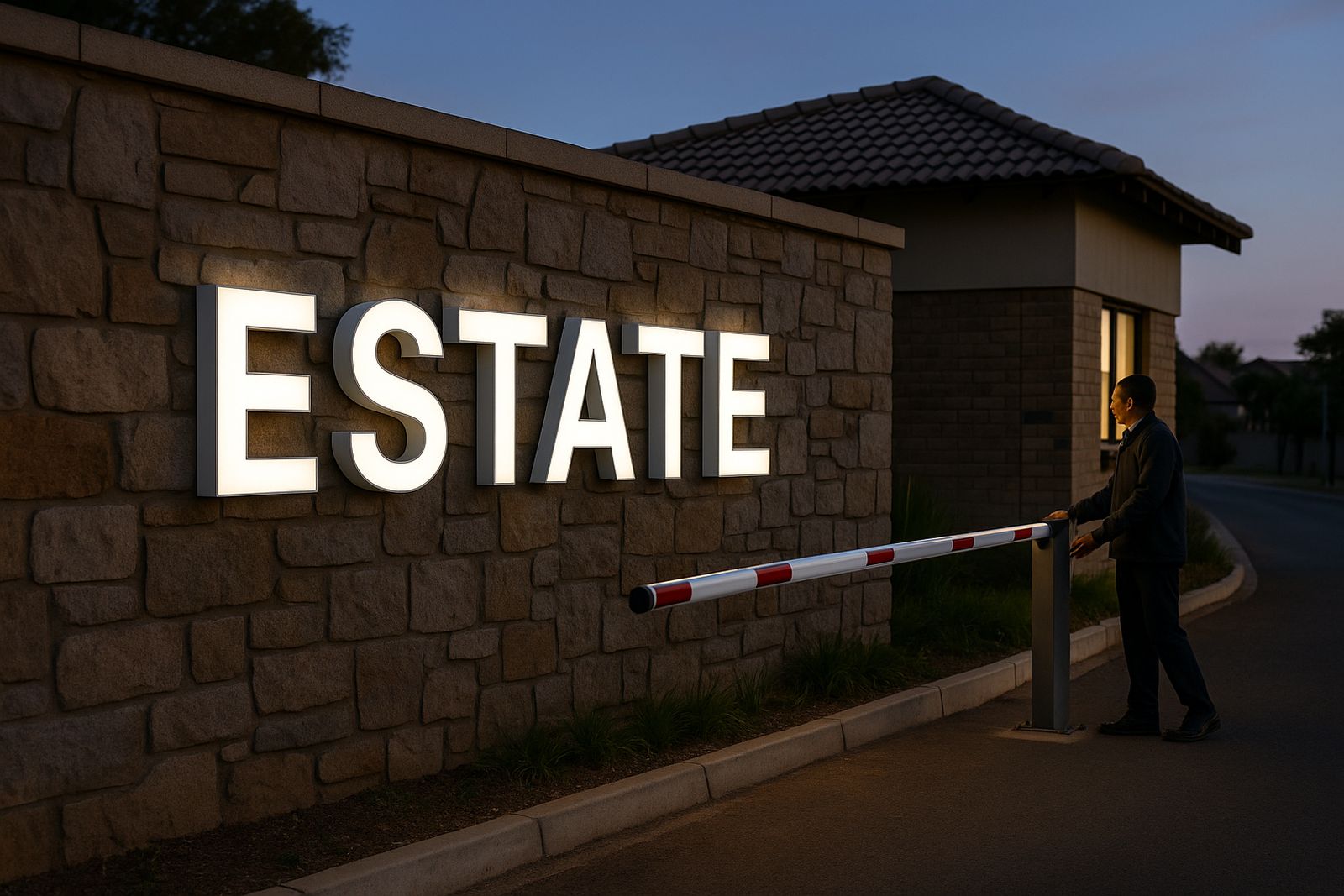
In estates, the first job is not decoration, it is wayfinding. Residents, visitors, contractors and delivery drivers must find the entrance, security point, blocks, phases, clubhouse, parking and service areas without phoning the office or stopping in the middle of the access road. That means clear lettering, consistent sizing and a layout that stays readable from a moving vehicle.
For residential estates in Midrand, Sandton and Pretoria, the signs often sit at the gate, on boundary walls and at internal intersections. In Durban and other coastal areas, the same signs also need to handle humidity, salt in the air and strong sun, so material choice matters from the start. Mixed-use sites usually add block names, office entries and parking direction boards, which can create a lot of small, repeated signage if the plan is not right.
We work with sign makers who need practical equipment for this type of work, not just one-off showpieces. The aim is to make lettering that looks straight, keeps its shape and can be reproduced across multiple panels without wasting time on rework.
Typical equipment and materials for estate lettering
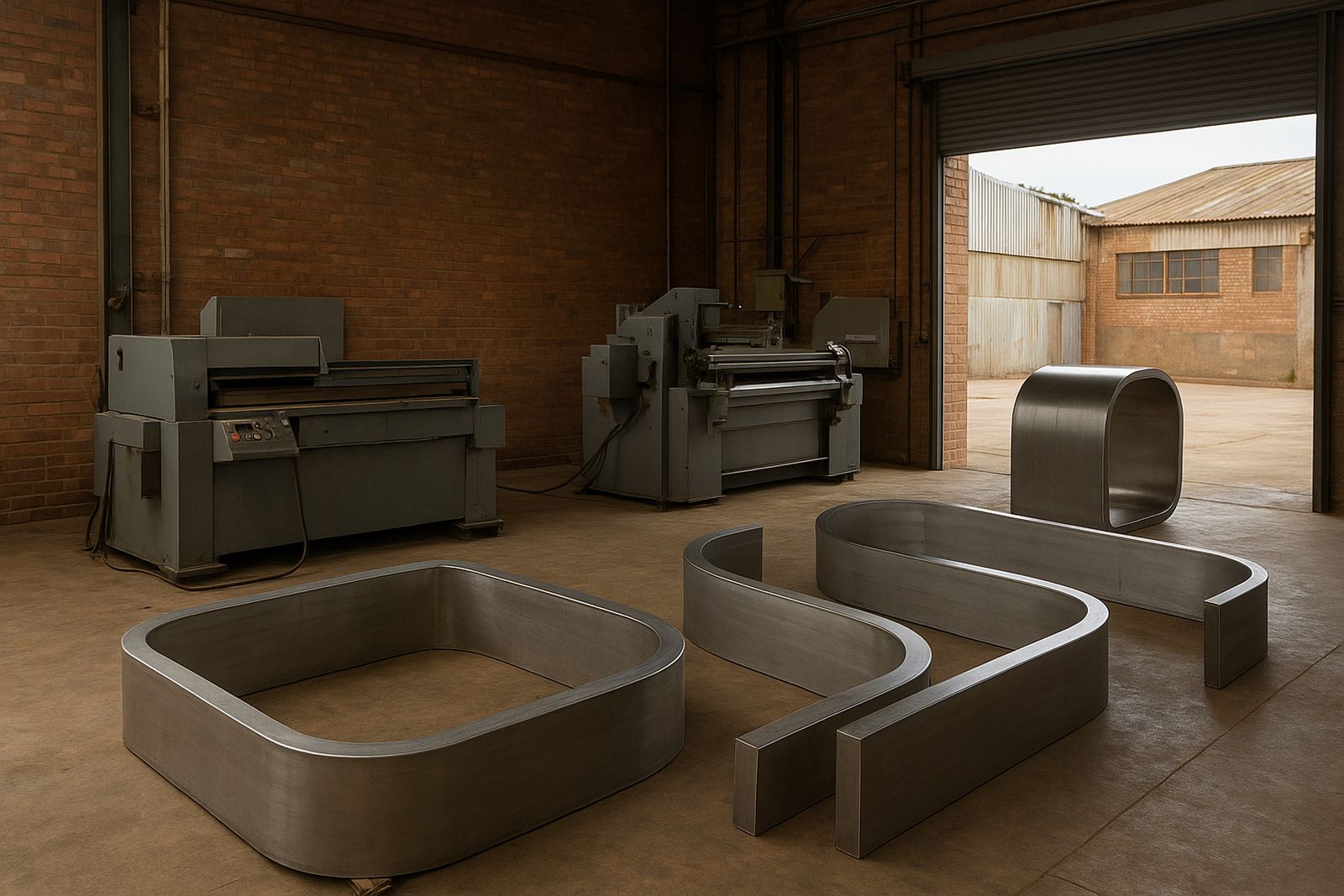
A good estate signage job usually relies on a combination of channel-letter bending equipment, suitable coil stock and matching returns. Many teams also need cutting, measuring and finishing tools that help them keep every letter consistent across a large site. When the same typeface and depth repeat across several signs, accuracy becomes very important.
- Channel-letter bending machine for forming clean returns
- Coils for the face or return material, selected for outdoor use
- Cutting and trimming tools for neat corners and joins
- Layout and measuring tools for repeatable letter height
- Fixing and finishing accessories for installation on walls or frames
We also see value in having spare parts and consumables on hand, because estate work often has deadlines tied to handover dates, committee meetings or security upgrades. If a machine is down for a day, the whole production line can fall behind and a small delay becomes a bigger one. That is why spares supply, breakdown support and preventive servicing are part of the practical side of this work.
Planning the layout before production starts
Good estate signage starts with site planning. Before any lettering is bent or fixed, the sign maker should know where vehicles approach from, how high the signs need to be, where walls have power or lighting nearby, and whether the estate has municipal or HOA rules on size, colour and placement. If the site has two entrances, the language, numbering and arrow logic must be the same at both points.
On larger developments, it helps to break the job into a sign schedule. That schedule should list each sign, its location, size, text, mounting method and whether it is illuminated or non-illuminated. It also helps to note if the sign must be visible at night, since load-shedding and low-light conditions can affect how much contrast is needed.
- Confirm all names, block numbers and road names before production
- Check sight lines from the road and from inside the estate
- Allow for future phases so new signs can match old ones
- Keep arrow direction and letter sizing consistent across the site
Common mistakes that cost time and money
A common mistake is making the main entrance sign too small for the approach speed. Another is using fine lettering that looks neat in the workshop but disappears from 30 metres away. In estate work, the readable sign usually beats the decorative one every time.
Some teams also under-specify material thickness or return depth, then find the letters distort in wind or sit unevenly on the wall. Coastal humidity can lead to premature finish issues if the wrong material is chosen, while inland dust and heat can create problems with adhesion and dust marks during finishing.
We often see rushed jobs where the client changes the estate name, phase numbers or access wording after fabrication has started. That leads to scrap and delays. It is better to finish the proof, sign off the drawing and confirm the installation points before cutting begins.
Budget ranges for estate signage in Rand
Costs vary depending on the number of signs, size of lettering, material thickness, finish and whether the job includes directional boards, entrance markers or wall-mounted channel letters. For smaller estate signage sets, a sensible starting budget for production equipment and materials can begin around R45 000 to R120 000, especially where a team is upgrading from basic tools to proper bending capability.
For larger sign makers handling repeated estate rollouts, equipment and setup can move into the R150 000 to R350 000 range when you include a fuller machine setup, consumables and support items. If a project includes onsite commissioning, operator training and installation planning, it is worth allowing extra budget for setup time and transport. That cost is usually cheaper than rework later.
We also advise keeping a separate allowance for preventive servicing and spare parts. In a working shop, a small service cost is easier to carry than a full stoppage during a handover week.
Support for sign makers working nationwide
Channel Letter is based in Midrand and supports sign makers across South Africa, including Sandton, Pretoria, East Rand, West Rand and Durban. Our team works with estate signage producers who need production coaching, material selection help and practical training for operators and supervisors.
That support matters when a job has to move from drawings to finished lettering with no room for guesswork. Whether you are fitting a single entrance sign or a full directional set across a mixed-use development, the process is easier when the machine setup, material choice and installation plan all match the site requirements.
- Operator Training and Refresher Training
- Onsite Commissioning and Installation Planning
- Preventive Servicing and Breakdown Support
- Spares Supply and Remote Tech Help
Estate signage queries can be sent through our contact form. Include the estate name, sign schedule and whether the work is for a new development or an older estate update, so the production method is set before the first panel is cut.