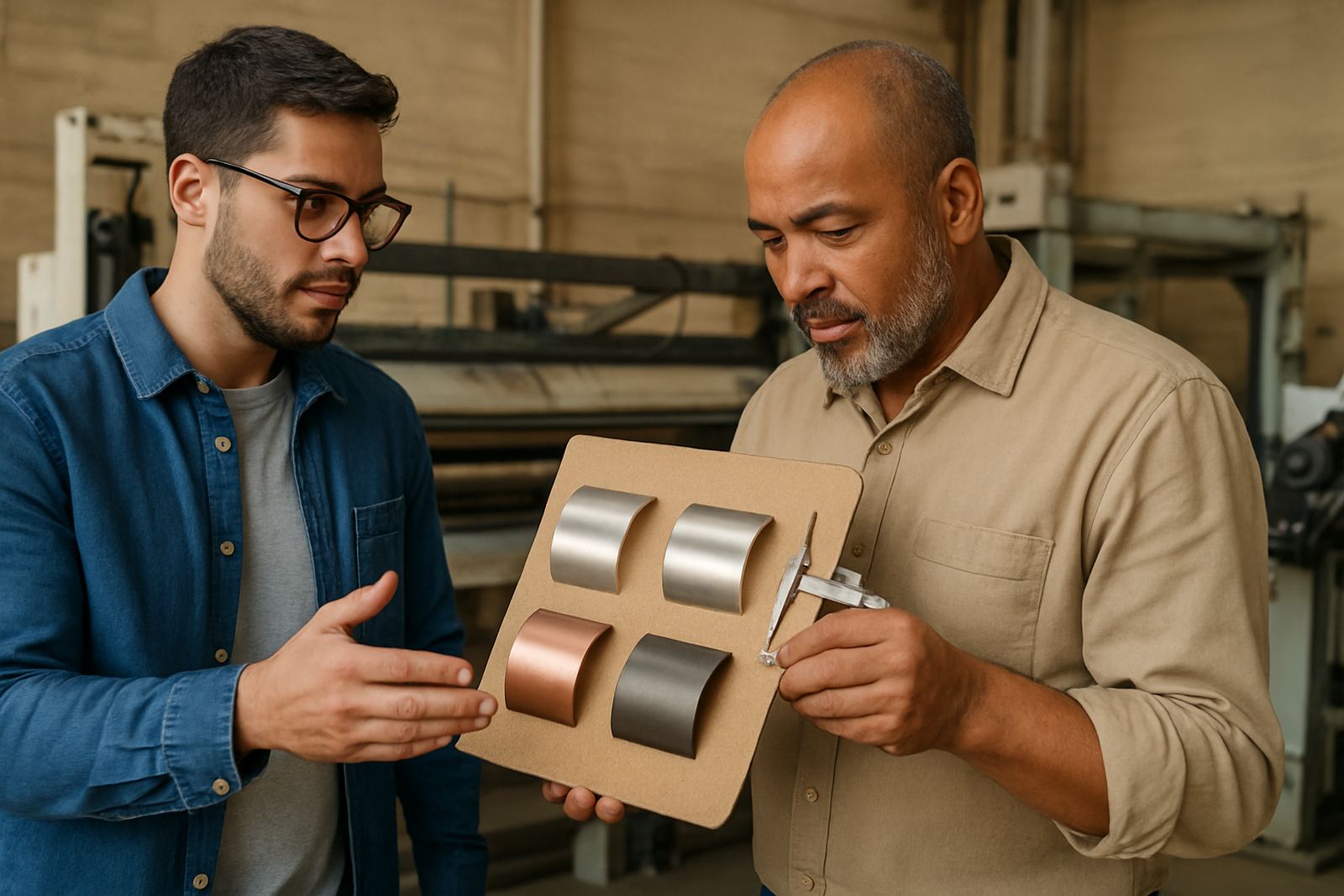
Choosing coils and returns for the job at hand
Material selection starts with the final sign, not the machine. A shop front in Sandton with close viewing distances needs a neater fold and tighter corner control than a high-mounted pylon in Pretoria or a roof sign in Durban. We help you match coil thickness, return height, coating and colour to the sign type, exposure and budget so the parts come off the machine ready to use, not to fight with.
For most channel letter work, the key choices are the coil face finish, the return depth and the material gauge. We look at whether the job is for illuminated letters, non-lit fascia work or high-volume production runs. Coastal humidity in Durban, strong sun in the East Rand and dust on inland sites all affect the right choice, and the wrong coil can lead to finish issues, oil canning or extra rework. A bit of planning here saves time later.
- Match material thickness to letter size and exposure
- Choose a face finish suited to painted, wrapped or exposed use
- Check return depth against the requested sign profile
- Allow for forming tolerances and post-bend trimming
What we check before recommending material
We review the artwork, letter height, mounting method and whether the sign will be internally lit or not. We also look at the intended site. A roadside sign in Midrand sees different conditions to an interior reception sign, and the coil choice should reflect that. If the client wants a brushed look, a deep gloss, or a neutral base for later finishing, we will advise what suits the process best.
Our team works with sign shops of all sizes, from a single operator to larger production floors. We can guide you on stock availability, preferred widths and the material volumes needed for a batch of letters. When a customer needs the same profile across multiple branches, we keep the spec consistent so the signs all look the same, even if they are installed in different towns.
- Artwork scale and letter return depth
- Viewing distance and lighting method
- Indoor, outdoor or coastal exposure
- Colour match needs and batch consistency
How the selection process works
We keep the process practical. First, send us the job details, drawing, letter heights and the finish you want. Next, we check the likely material options and talk through the trade-offs between cost, speed and durability. If needed, we recommend a sample run so you can test bend quality and appearance before committing to the full order.
For many jobs, the decision is shaped by machine settings as much as by the material itself. Some coils bend cleaner at certain feed speeds and heat settings, while others suit thicker returns or tighter corners. We use the real production conditions in your shop, not a generic spec sheet, because a neat sign in the factory must still hold up on site after installation and cleaning.
- Step 1: Share drawings, quantities and site details
- Step 2: Confirm finish, gauge and return profile
- Step 3: Approve a sample or proceed to production
- Step 4: Set the machine and begin cutting and bending
Typical material specs we guide you on
Different sign jobs call for different material ranges. A small retail logo may use lighter coil with a smaller return, while a bigger outdoor fascia sign often needs thicker stock for better shape retention. We help you choose a sensible balance so the sign does not become too heavy or too thin for the intended use.
Where colour and finish matter, we consider how the sign will read under daylight and after dark. Matte finishes can hide handling marks better, while brighter finishes can suit premium retail work. If the job is destined for a coastal town or an area with heavy rain, we also consider corrosion resistance and maintenance cycles. The right spec can make the sign easier to clean and longer lasting, which is what clients usually want in the end.
- Common coil widths for small, medium and large letters
- Return depth matched to letter body size
- Thickness suited to indoor or outdoor use
- Finish options for painted, exposed or illuminated signs
Turnaround times and pricing approach
Turnaround depends on stock, job volume and whether a sample is needed. In many cases, we can advise on material choice quickly once we have the artwork and a clear brief. For standard selection queries, we provide feedback during working hours once we have the artwork and a clear brief. More complex jobs involving multiple sign types, branch rollouts or colour matching may take longer, but we keep you updated so production can stay on schedule.
Our pricing approach is straightforward. Material costs depend on gauge, finish, quantity and any special sourcing. Advice is normally tied to the wider service request and may form part of a machine support or production planning visit. If you are comparing options for a tender or rollout, we can help you assess the cost impact of each material choice before you place an order.
- Same day guidance for standard jobs where details are complete
- Extra time needed for samples, special finishes or bulk runs
- Pricing based on material spec, quantity and sourcing effort
- Clear advice before you commit to production
Maintenance and replacement intervals
Even the best material performs better with correct storage and handling. Keep coils dry, flat and covered, away from dust and moisture. In humid conditions, especially in Durban or near the coast, it pays to check stock regularly for surface change or edge damage. Returns should be stored so they do not pick up bends before they go into the machine. A neat store room can make the difference between clean bends and wasted material.
For active production sites, we recommend regular checks on stock rotation and machine settings every month, with a fuller review every three to six months depending on output. If you are running long jobs or frequent colour changes, more frequent checks help keep your finish consistent. We can also advise when to replace a stock type that is no longer giving clean bends or matching the intended sign finish.
- Monthly stock and setting checks for busy workshops
- Three to six monthly review for material performance
- Immediate replacement if finish quality drops or stock is damaged
- Store dry, covered and off the floor
Working with our Midrand team
From our Midrand base, we support sign makers across South Africa with practical guidance that fits real production conditions. Whether you are in Sandton, Pretoria, the East Rand, West Rand or Durban, we can help you choose coils and returns that suit the job, the machine and the client’s expectations. Our team includes sales, technical support, training and installations staff, so you get advice from people who understand the full process.
If you need help on a live job, we can talk through the spec, recommend a direction and help you avoid material waste. That matters when power interruptions, delivery timing and municipal site rules already put pressure on the job. Good material choice keeps the work moving and reduces surprises later.
- Contact: our contact form
- Support for single jobs, rollouts and production planning
- Help with machine settings, sample runs and stock choice
- Advice suited to sign makers across South Africa
Key facts
| Coil thickness guidance | Suitable for light, medium and heavier channel-letter work depending on sign size and exposure |
|---|---|
| Return heights | Matched to letter depth, commonly set to the required profile for clean bending |
| Finish options | Advice for matte, gloss, coated and other sign-ready surface finishes |
| Material widths | Selected to suit production volume, machine setup and letter batch size |
| Use environments | Indoor, outdoor, inland heat and coastal humidity |
| Maintenance interval | Monthly checks for busy shops, with fuller review every 3 to 6 months |