A letter is more than its bend
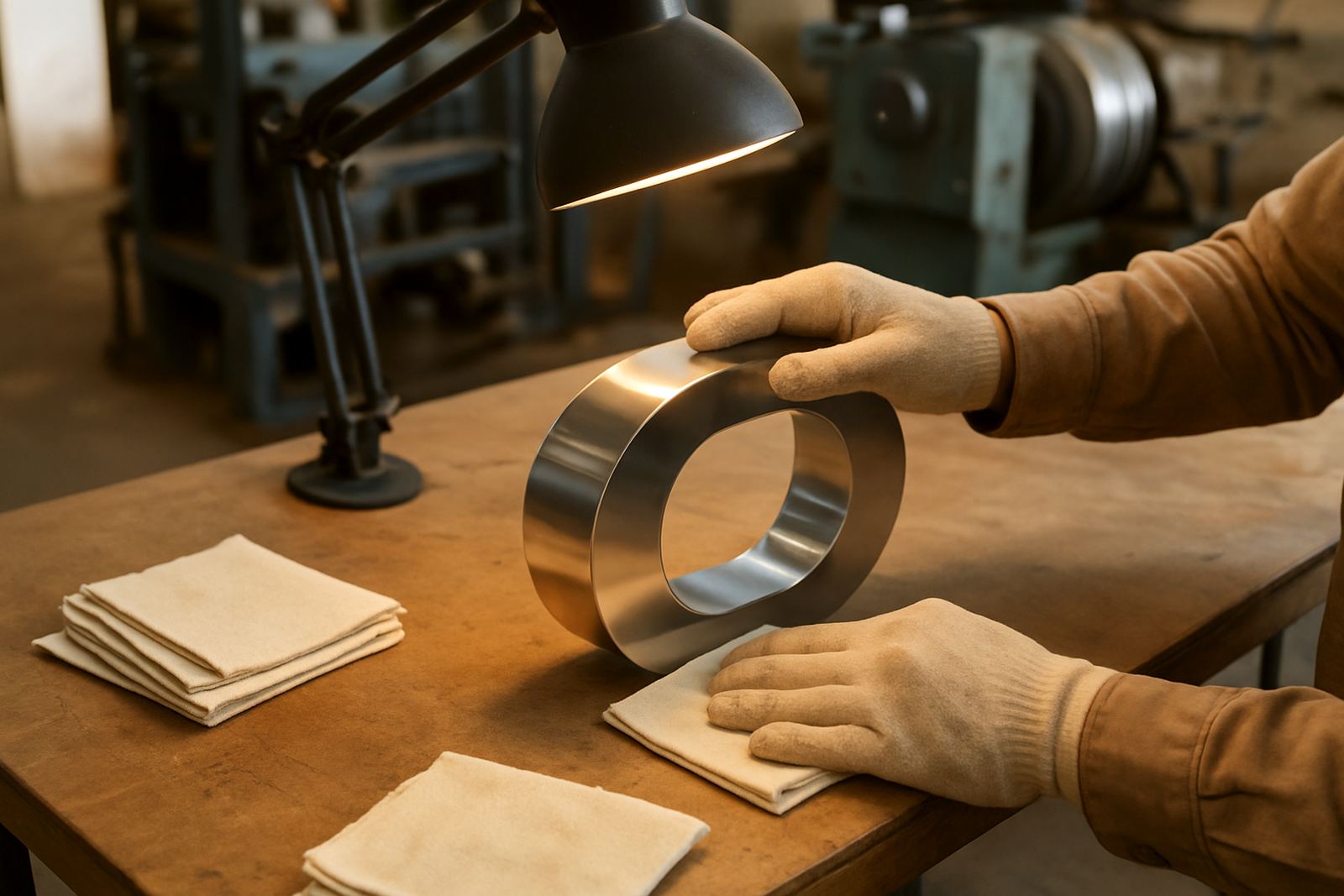
Bending a clean return is only part of a channel letter. The return still has to be joined to a back, the face has to be cut to fit, and the whole letter has to look right from the pavement. Those last steps are where many metal letters lose the finish the bender gave them.
Customers raise it with us all the time. They get a good bend out of a steel return bender, and then heavy welds, grinding marks and heat stains spoil the stainless at the joining stage.
“Most of the finish problems we see on metal letters do not come from the bend at all. They come from welding and the clean-up afterwards. The laser welder leaves a narrow, neat seam, so there is far less grinding and the brushed finish stays close to how it came off the coil.”
Kobus Joubert, Technical Manager
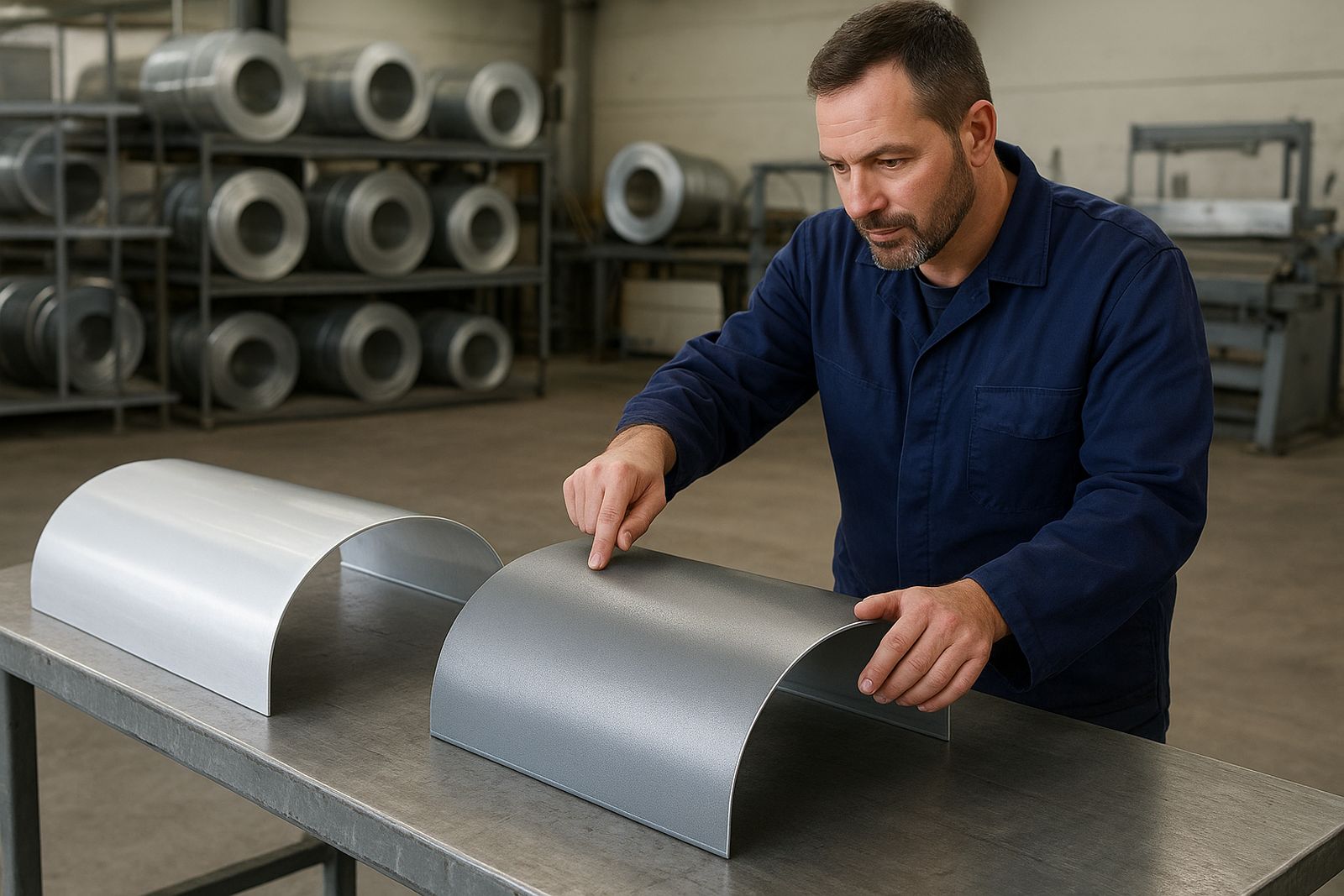
Our note on caring for metal finishes makes the same point. The fewer times a grinder touches a return, the better the letter looks after install.
Two AM.CO.ZA machines in the bay
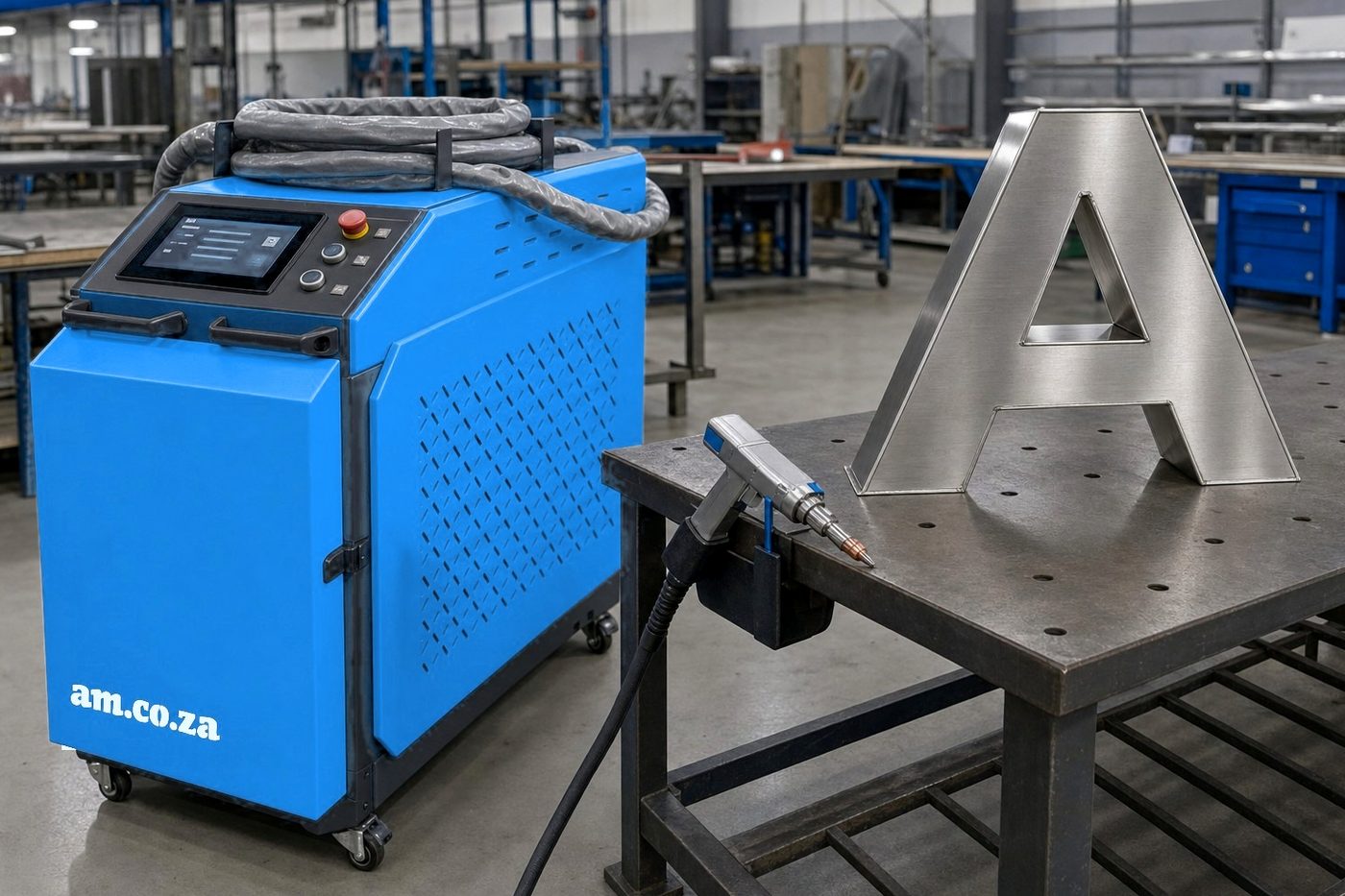
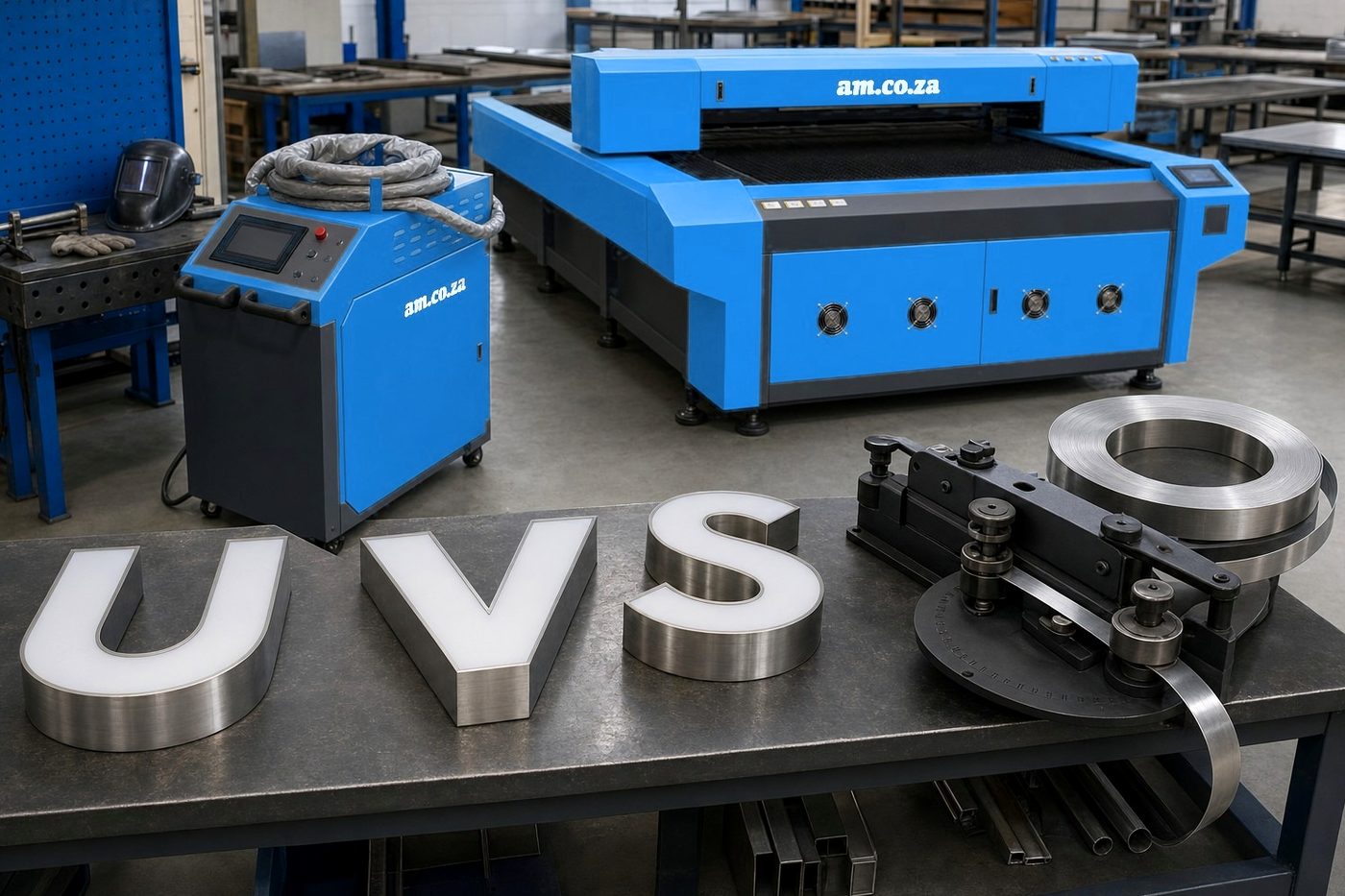
- Handheld fibre laser welder for metal returns. The AccuWeld-Lite 1500W handheld fibre laser welder joins stainless returns to their backs on sheet from 0.5 to 3.5 mm thick, with an automatic wire feeder for the filler. It is air cooled and runs on a standard 220V supply, so there is no water chiller to plumb in. If a different power rating suits your shop better, compare the other handheld laser welders AM.CO.ZA carries.
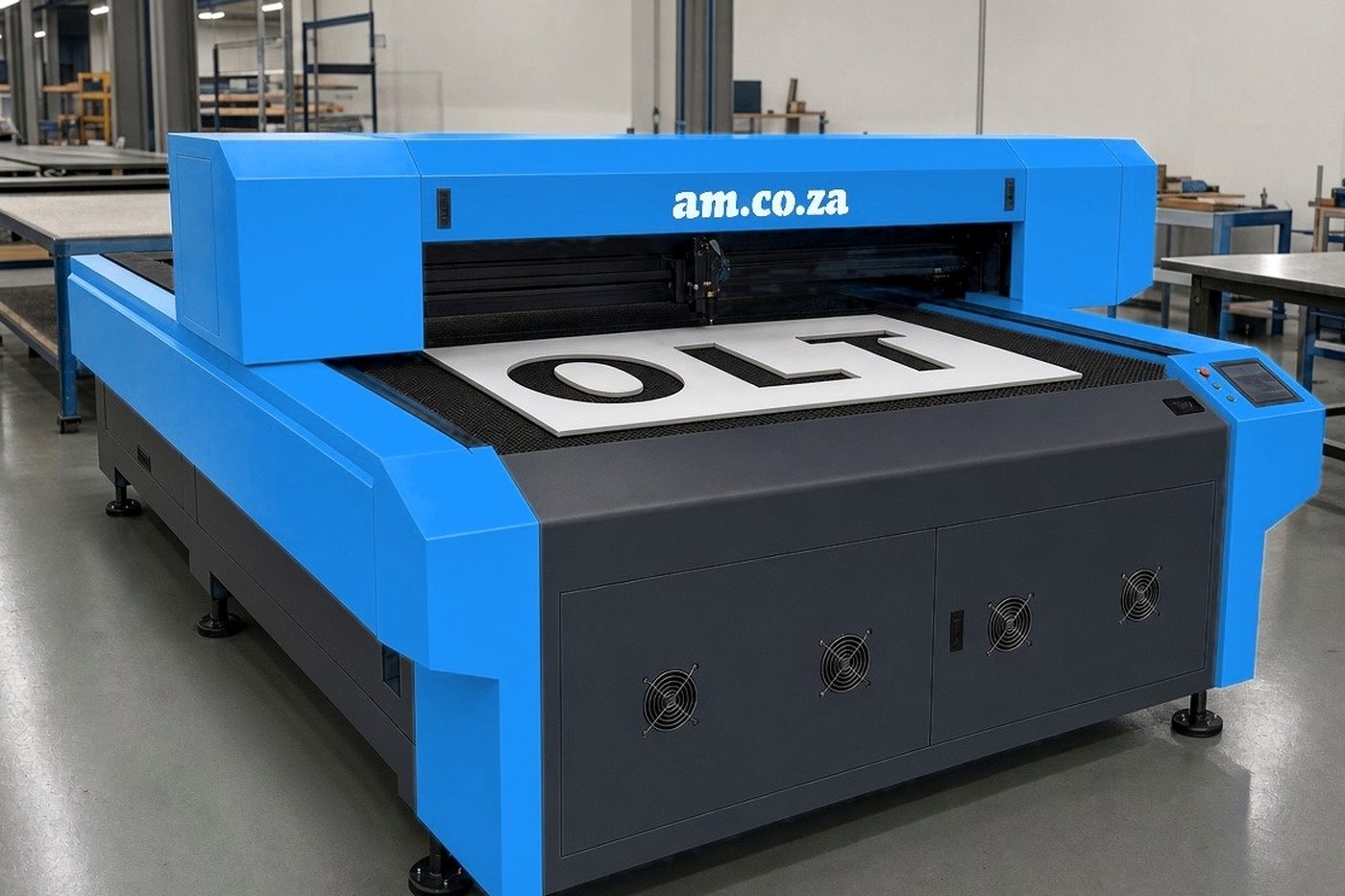
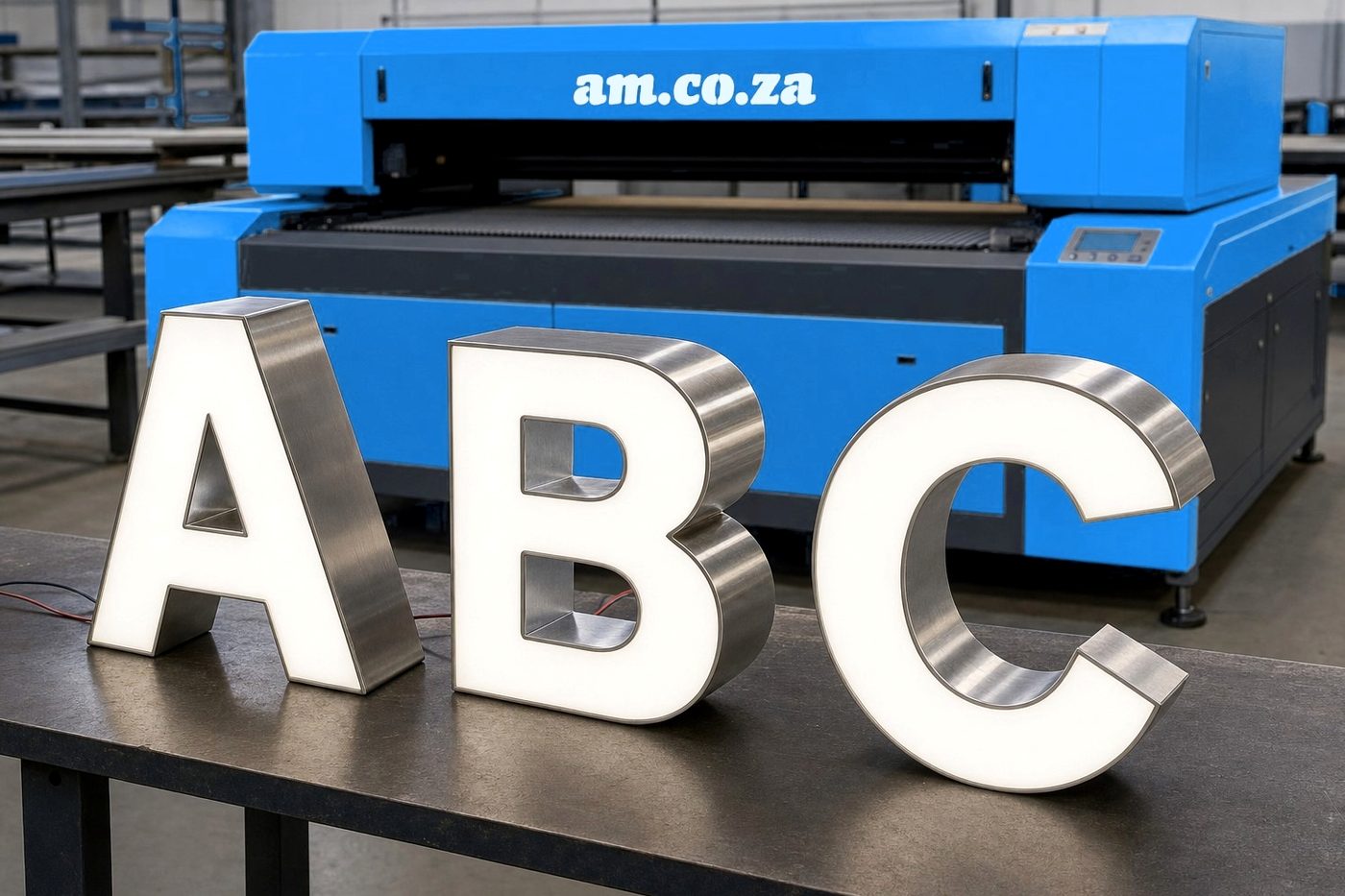
- Flatbed CO2 laser for faces and templates. The TruCUT 1300 × 2500 mm 130W CO2 laser cutter cuts and engraves acrylic letter faces, templates and pattern sheets, and its full-size bed takes a whole sheet for big roll-outs. Cut acrylic comes off the bed with clean, polished edges. The laser works on non-metal sheet only, so the stainless stays with the bender and the welder. Desktop units and other bed sizes sit alongside it in AM.CO.ZA's CO2 laser machines.
Faces that fit the first time
A face that sits a millimetre off on a deep letter shows straight away. Cutting faces in-house, from the same file we use for the returns, takes the guessing out of the fit. That matters most on trimless letters, where no trim cap hides a poor edge.
“When a client brings us artwork, we can now bend the returns, cut the faces and weld up a sample letter for them in our own bay. They take it back to their customer for sign-off, and it is the easiest way we know to get approvals through.”
Desigan Soobramoney, Installations Supervisor
What made AM.CO.ZA the right fit
Before any quote arrived, the AM.CO.ZA team wanted to know our return depths, the metals our customers bend most and the floor space set aside for the bay. The machines they put forward suited a sign shop rather than a factory, and the price carried no extras we would never use. Our layout planning guide gives customers the same advice when they set up their own workshops.
When the welder needs a consumable or the laser needs a part, our technicians order it through the AM.CO.ZA Johannesburg branch. Machine settings get looked up in the AM.CO.ZA guide.
“Supporting sign makers is what we do, so we are picky about who supports us. AM.CO.ZA dealt with us as fellow fabricators and gave us straight answers from the first conversation.”
Sibusiso Mthembu, who leads Channel Letter
Ways to use the bay
- Pick a profile first. Our notes on choosing letter depth and the return depth guide help you settle the return profile before you visit.
- Indoor or outdoor. We can show you how face and return choices change between a Sandton reception set and a Boksburg forecourt sign. The note on indoor vs outdoor letters covers the rest.
- Training. Operators on our training courses now spend time in the finishing bay as part of the course.
To see the bay running, use the contact form or speak to our team in Midrand.